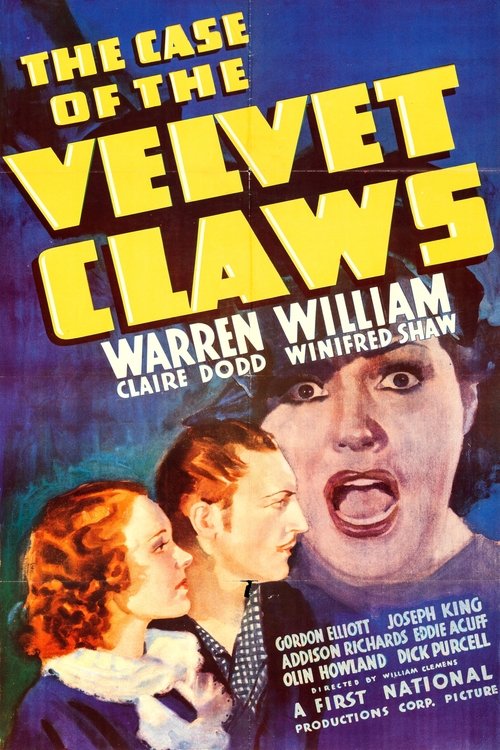
The Case of the Velvet Claws
1936
No user ratings available yet
Representation score: 0.4 out of 10
Representation Score
Minimal
1941
ApprovedDirector
Bernard B. Ray
Runtime
63 minutes
Average Rating
No ratings yetNew Showbiz Analysis
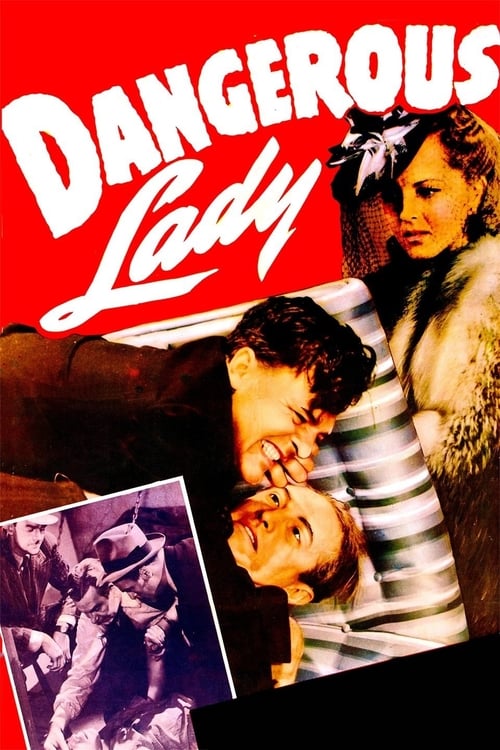
Dangerous Lady is a conventional 1941 genre piece that adheres to the standard studio system constraints of its era. It focuses on efficient, crime-driven storytelling rather than social critique. The film's primary strength lies in its depiction of a professional female lead. By making Phyllis an attorney, the film offers more intellectual ability to act than many contemporary domestic female roles. However, the narrative remains deeply rooted in traditional structures. It lacks complexity in addressing multiple aspects of identity, racial diversity, or any subversion of the institutional norms that govern the plot.
Category Breakdown
The film centers on a traditional marital partnership. There is no evidence of non-straight relationships or same-sex intimacy within the narrative.
Phyllis provides a degree of professional ability to act as an attorney working alongside her husband. This disrupts the purely domestic female cliché, though she remains within mid-century gender roles.
The film appears to follow the homogeneous casting standards of 1941. There is no indication of a diverse or non-Anglo-Saxon cast.
The story relies on traditional Western legal and investigative institutions to resolve conflict. It reinforces established social orders rather than critiquing them.
No characters with visible or invisible disabilities are identified in the story.
Present on Screen
Limited or Absent
Official Synopsis
Private detective 'Duke' Martindale and his wife, Phyllis, an attorney, are working together to clear a girl falsely convicted of murdering a judge. Two people who know the truth are killed and 'Duke' Is shot at. Despite some interference by Police-Sergeant Brent, and a dangerous automobile chase and 'Duke' and Phyllis finding themselves prisoners of the real murderers, the case is solved.
1936
1934
1943
1941
1939
1939
1938
1944
No reviews yet. Be the first to share your thoughts on this movie!
Use the rating form above to leave a star rating and optional review.