
Whistling in the Dark
1933
No user ratings available yet
Representation score: 1.6 out of 10
Representation Score
Minimal
1943
ApprovedDirector
Leigh Jason
Runtime
81 minutes
Average Rating
No ratings yetNew Showbiz Analysis
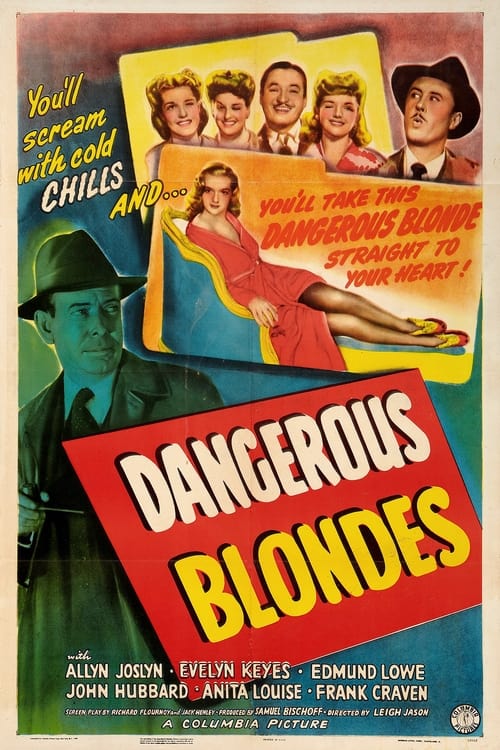
Dangerous Blondes is a product of its historical era, prioritizing established genre clichés over social subversion. The narrative structure reinforces mid-century norms regarding gender, race, and institutional authority. The film relies on a predominantly white cast and traditional gender hierarchies. While women are central to the mystery, they often function in reactive or supportive roles rather than as leaders. Ultimately, the work offers minimal disruption to the cultural status quo of the 1940s, focusing on the preservation of order through conventional law enforcement and professional structures.
Category Breakdown
The film follows a traditional mid-century crime structure. There is no evidence of non-binary gender identities or same-sex intimacy, focusing instead on the heterosexual relationship between the protagonists.
Female characters play key roles in driving the mystery's plot, yet they largely occupy traditional roles such as secretaries or victims. Masculine authority remains unchallenged through the police inspector and studio owner.
The production adheres to the homogeneous casting standards of 1940s Hollywood. The ensemble is predominantly white, with no characters of color having significant roles in the story.
The story reinforces conventional social structures like marriage and the legal system. It operates within a framework of Western institutional stability and binary morality.
There are no visible or invisible disabilities portrayed in the narrative. No characters are identified as having physical or neurodivergent impairments.
Present on Screen
Limited or Absent
Official Synopsis
Mystery writer Barry Craig (Allyn Joslyn) and his wife Jane (Evelyn Keyes), prefer solving crimes rather than writing about them. They get a chance when killings plague the fashion photography studio of Ralph McCormick (Edmund Lowe). After his secretary, Julie Taylor(Anita Louise) reports an attempt to murder her there, Erika McCormick's (Ann Savage) Aunt Isabel Fleming (Mary Forbes) is stabbed and the evidence points to Madge Lawrence (Bess Flowers) an older model and an apparent suicide. Police Inspector Joseph Clinton (Frank Craven) declares the case closed...but then Erika is murdered.
1933
1939
1941
1941
1942
1934

1942
1948
No reviews yet. Be the first to share your thoughts on this movie!
Use the rating form above to leave a star rating and optional review.