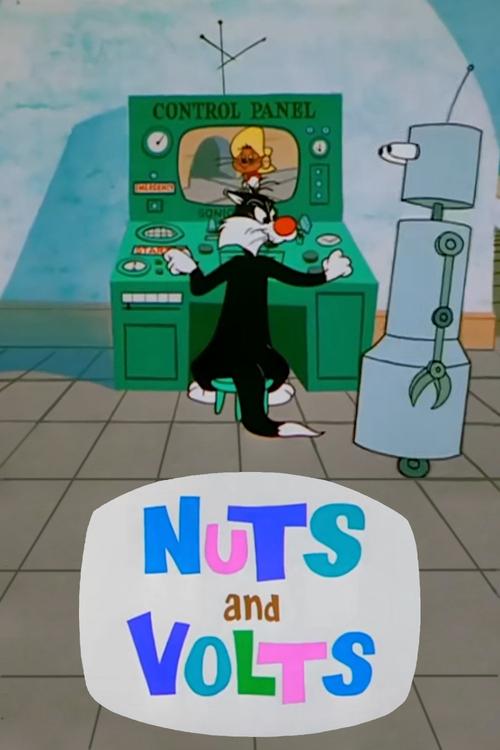
Nuts and Volts
1964
No user ratings available yet
Representation score: 1.9 out of 10
Representation Score
Minimal
1946
Director
Arthur Davis
Runtime
7 minutes
Average Rating
No ratings yetNew Showbiz Analysis
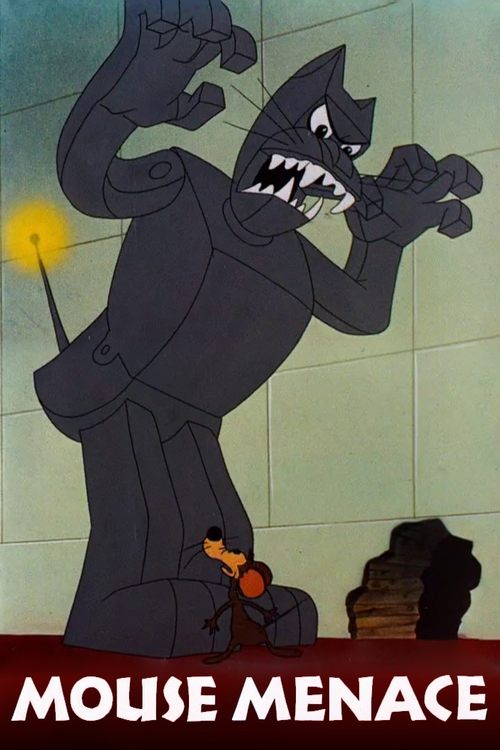
Mouse Menace is a classic mid-century animated slapstick short. Its narrative architecture revolves around physical comedy and a technological arms race between Porky and a menacing mouse. The film prioritizes gag-driven storytelling and kinetic movement over social commentary. It follows a cycle of mechanical escalation, moving from biological cats to synthetic robots to resolve a domestic conflict. Ultimately, the work upholds the traditional status quo of its era. It focuses on domestic stability and mechanical conflict rather than identity-based exploration or progressive social frameworks.
Category Breakdown
The film focuses solely on a domestic conflict between Porky and a rodent. It does not depict any non-traditional gender or sexual orientations.
Using anthropomorphic animals abstracts gender roles. The story relies on traditional domestic settings and standard mid-century comedic clichés.
The story uses animal characters in a domestic setting. There is no indication of racial or ethnic casting or metaphors for ethnic diversity.
The plot centers on Western domesticity and the preservation of property. It follows a linear, problem-solving structure typical of the era.
There is no evidence of characters having visible or invisible disabilities. Disability is not used as a narrative device in this film.
Present on Screen
Limited or Absent
Official Synopsis
Porky has a particularly menacing mouse in his house; after his traps, and an increasingly nasty set of cats all fail, Porky builds a robot cat. This cat proves to be a much bigger challenge for the mouse, who ultimately builds a robot mouse packed with explosives.
1964
1946
1949
1946
1953
1949
1946
1956
No reviews yet. Be the first to share your thoughts on this movie!
Use the rating form above to leave a star rating and optional review.