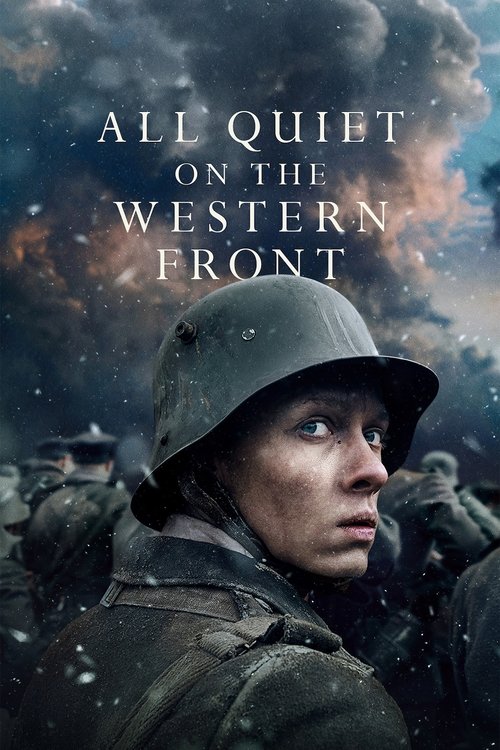
All Quiet on the Western Front
2022
No user ratings available yet
Diversity score: 3.8 out of 10

2015
Director
Shinya Tsukamoto
Runtime
87 minutes
Average Rating
No ratings yetSynopsis
In the final days of World War II, occupying Japanese forces in the Philippines face resistance from the local population and the American offensive. The dwindling Japanese soldiers attempt to survive through the horrors of war.
Overall Score
Fair
Category Breakdown
LGBTQ+ Representation
The film focuses on a hyper-masculine environment of retreating soldiers. There is no presence of non-cisnormative identities or same-sex intimacy within the character arcs.
Gender Representation
Women are largely absent from the central survival narrative, appearing mostly as distant memories. The story depicts the erosion of social structures rather than subverting gender hierarchies.
Racial & Ethnic Diversity
Casting is largely homogeneous to reflect the historical context of the Imperial Japanese Army. The narrative focus remains on Japanese soldiers despite the Philippine setting.
Religious & Cultural Diversity
The film offers a profound critique of the imperialist war machine and military hierarchy. It portrays the breakdown of traditional morality as a consequence of systemic collapse.
Disability Representation
The film lacks characters with identified disabilities but provides a visceral study of physical and mental trauma. Bodily wasting is used to illustrate the horrors of war.
Strengths
Areas for Improvement
AI Analysis
Shinya Tsukamoto’s film is a visceral study of human endurance that prioritizes existential realism over demographic inclusivity. It succeeds as a cultural critique, deconstructing the myth of wartime heroism and the corruption of imperialist structures. However, the film lacks diversity in traditional categories. The narrative is centered on a homogeneous group of male soldiers, leaving little room for gender, racial, or LGBTQ+ representation within the primary survival arc. Ultimately, the work functions as an anti-authoritarian piece. It trades social representation for a deep, intellectual deconstruction of morality and the physical decay caused by systemic collapse.
2022
1957

2009
2015
1955
2016

1944
1974

2018
2017
1970
1966
No reviews yet. Be the first to share your thoughts on this movie!
Use the rating form above to leave a star rating and optional review.