
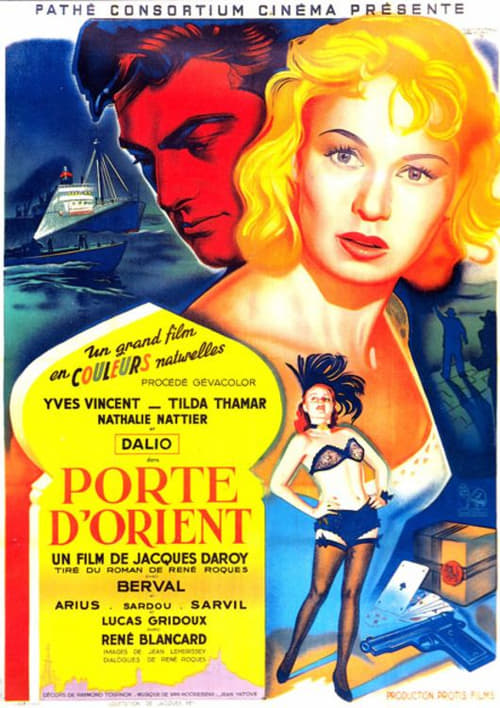
A Lady Without Passport
1950
No user ratings available yet
Representation score: 1.6 out of 10
Representation Score
Minimal
1950
16Director
Jacques Daroy
Runtime
100 minutes
Average Rating
No ratings yetNew Showbiz Analysis
Oriental Port operates as a conventional mid-century thriller, adhering to the standard genre clichés of its era. The plot focuses on the friction between institutional authority and the fringes of society, prioritizing a classic moral conflict over social deconstruction. The film lacks a concerted effort to disrupt established social hierarchies or offer nuanced perspectives reflecting multiple aspects of identity. Instead, it relies on a traditional romantic core and established narrative structures common to 1950s French cinema. While the Mediterranean setting hints at internationalist themes, the film appears to function primarily as a standard genre piece that favors institutional stability over the exploration of underrepresented identities.
Category Breakdown
The film centers on a relationship that assumes everyone is straight or cisgender. There is no evidence of non-traditional gender identities or critiques of this assumption.
The story relies on traditional gender roles where the woman takes control through illegal activities while the male protagonist remains the main focus.
The film is set in Marseille, suggesting Mediterranean or colonial-era themes. However, it is unclear if this provides meaningful representation or merely serves as a stylistic backdrop.
The story reinforces traditional institutional roles centered around a state official. It follows a standard moral binary typical of 1950s cinema without much social critique.
There is no evidence of characters with visible or invisible disabilities playing a central role in the narrative.
Present on Screen
Limited or Absent
Official Synopsis
In Marseille, a customs inspector falls in love with a young woman involved in dubious traffic.
1950
1947
1957

1969

1954

1948

1954
1948
No reviews yet. Be the first to share your thoughts on this movie!
Use the rating form above to leave a star rating and optional review.