
For Love and Gold
1966
No user ratings available yet
Representation score: 5.1 out of 10
Representation Score
Limited
1964
Director
Lucio Fulci
Runtime
85 minutes
Average Rating
No ratings yetNew Showbiz Analysis
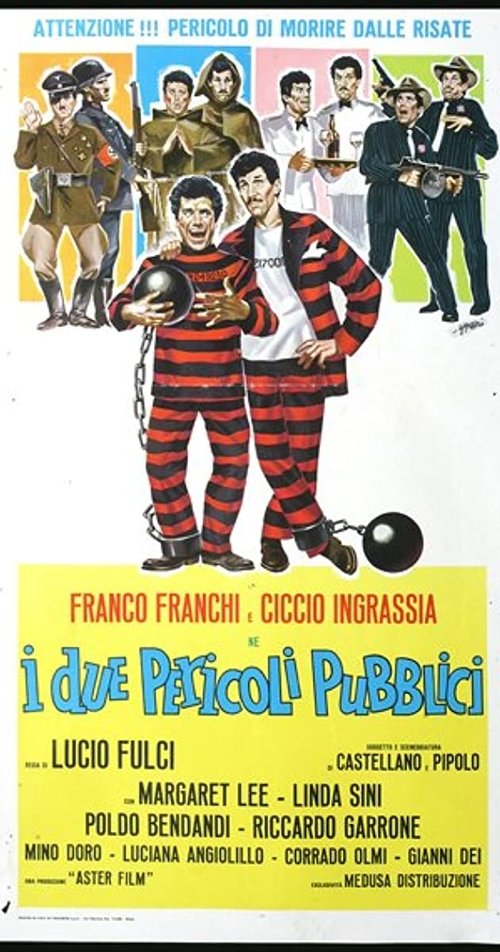
Two Public Enemies is a typical mid-century comedy-adventure that relies on conventional structures and traditional character types. It doesn't aim to disrupt social hierarchies. The film focuses on male-driven plots and Western religious themes, reinforcing the cultural norms of 1964 Italian cinema. It doesn't offer much in terms of diverse or progressive perspectives.
Category Breakdown
The film doesn't show any non-binary or same-sex relationships. The focus on a comedic duo fits the traditional social norms of the time.
Men play the main roles and drive the plot through their criminal mistakes. The film doesn't challenge traditional gender roles or portray masculinity as flawed.
The movie reflects the limited diversity of the mid-1960s Italian market. It uses Western religious symbols without featuring diverse casts or non-white majorities.
The story uses traditional Western religious symbols like Saint Peter and Paradise. While the protagonists have some moral complexity, the film upholds established cultural traditions.
There are no disabilities, visible or otherwise, that are central to the plot or character development.
Present on Screen
Limited or Absent
Official Synopsis
Two two-bit crooks get in the way of a criminal ring and cause a hold up to fail. The two flee to Paradise avoiding a reprisal and try and steal Saint Peter's halo.
1966

1977
1966
1987
1978
1926

1962

1973
No reviews yet. Be the first to share your thoughts on this movie!
Use the rating form above to leave a star rating and optional review.