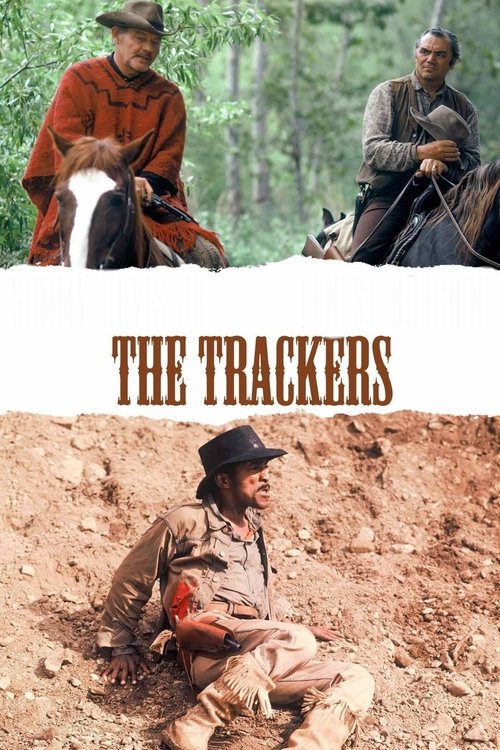
The Trackers
1971
No user ratings available yet
Representation score: 0.3 out of 10

Representation Score
Fair
1972
TV-PGDirector
Ted Post
Runtime
97 minutes
Average Rating
No ratings yetNew Showbiz Analysis
The film opens with the sterile geometry of a frontier fort, a white structure imposed on a hostile desert, where Major Harkness (George Peppard) commands a garrison that is already failing. The sold meaning is a critique of institutional incompetence: the army is not a heroic force but a bureaucratic machine that sacrifices its men for the sake of appearance. The camera lingers on the exhaustion of the soldiers and the polished, empty uniform of Captain Buckley (Pernell Roberts), contrasting the grime of reality with the clean lines of officialdom. The Navajo are the external threat, but the real enemy is the internal logic of the fort itself, which prioritizes protocol over survival. The film’s argument is that the military is a hollow institution, but its internal logic remains traditional. The white men are the victims of the system, but they are still the center of the story. The Navajo are the "other," a faceless force that justifies the fort’s existence. The women are the moral compass, but they are not agents of change. The ending does not reward the individual; it rewards the realization that the mission was a lie. The last image is not a victory, but a quiet acknowledgment of failure. The film is a 1972 TV western that uses the frontier to critique the Vietnam-era military, but it does not challenge the racial or gender hierarchies that underpin that institution. It is a film about the failure of the system, but it is still a film made by and for the system.
Category Breakdown
Absent. The narrative focuses exclusively on heterosexual frontier dynamics and military hierarchy. No same-sex intimacy, queer characters, or non-binary identities appear on screen.
Limited. Heller Chase serves as the emotional anchor and moral witness to the men’s degradation, but she remains a passive observer in a combat zone. The film treats male incompetence as the central conflict while positioning women as the stabilizing, non-combatant conscience.
Limited. The Navajo are depicted as a monolithic, threatening force ("savages") rather than individuals with agency. The white military hierarchy is the unmarked center, while Native Americans function as the external obstacle that justifies the fort’s defensive posture.
Present. The film critiques the hollow bureaucracy of the American military, showing how institutional rigidity and poor leadership lead to unnecessary suffering. The frontier is portrayed not as a place of opportunity, but as a trap where the system fails its own men.
Absent. Injuries are treated as realistic costs of war rather than identity markers. No characters have permanent impairments that shape the narrative; physical wounds are temporary obstacles to the military mission.
Present on Screen
Limited or Absent
Official Synopsis
The commander of an isolated frontier cavalry post tries to stop an Indian war and find his son, who has been kidnapped.
1971
1960
1991
1966
1987
1971
1990
1961
No reviews yet. Be the first to share your thoughts on this movie!
Use the rating form above to leave a star rating and optional review.