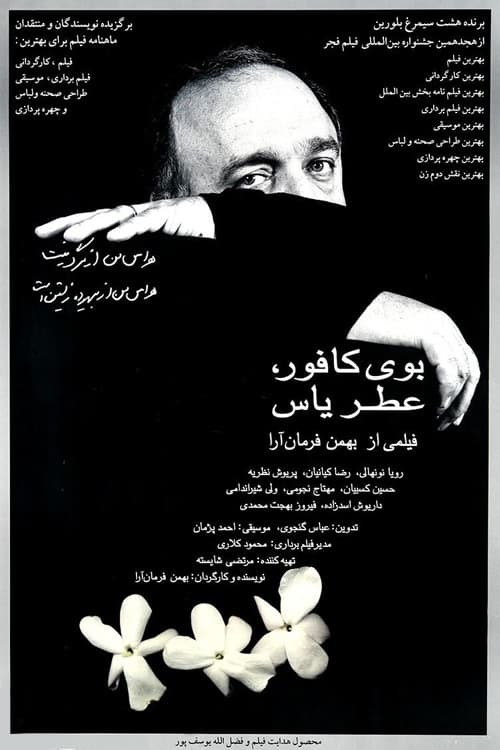
Smell of Camphor, Fragrance of Jasmine
2000
No user ratings available yet
Representation score: 7.5 out of 10
Representation Score
Good
2002
Director
Bahman Farmanara
Runtime
111 minutes
Average Rating
No ratings yetNew Showbiz Analysis
Bahman Farmanara’s drama is a contemplative study of spiritual crisis that prioritizes internal psychological landscapes over traditional plot progression. It deconstructs established social and religious hierarchies through moral ambiguity. While the film provides a non-Western perspective, it lacks diverse character's ability to drive the story, focusing instead on symbolic roles for the male protagonist's awakening.
Category Breakdown
A call girl appears in a dreamlike sequence to trigger the protagonist's spiritual crisis. She serves mainly as a narrative device and does not have her own independent role.
The film critiques patriarchal dominance through the mistreatment of women by the protagonist. Female characters like the estranged wife mostly mirror the male lead's psychological journey.
Set in Iran, the film offers a non-Western perspective highlighting differences between social classes, including the affluent and those with fewer resources.
The narrative uses a religious figure to prompt existential questions, challenging traditional family units and social hierarchies.
A comatose child introduces themes of physical vulnerability and neurological crisis. The character acts more as a metaphysical catalyst than a portrayal of living with disability.
Present on Screen
Limited or Absent
Official Synopsis
Director Bahman Farmanara's second film following a 20-year exile from his native Iran depicts the spiritual crisis of a middle-aged man. In the film's dreamlike opening scene, Dr. Reza Sepidbakht (Reza Kianian), a well-off Tehran gynecologist, thinks he runs over an angel while driving home at night with a call girl. The next morning at the hospital where he works, he is shown a comatose boy who is famous for having memorized the entire Koran. These two events cause him to rethink his cynical outlook on life and his relationships with his elderly father, wayward son, and the women he has mistreated since becoming estranged from his wife. When the boy awakens from his coma, Dr. Sepidbakht begins to look to him for answers.
2000
1997
1990

1999

2005

1999
2009

2003
No reviews yet. Be the first to share your thoughts on this movie!
Use the rating form above to leave a star rating and optional review.