Find another title
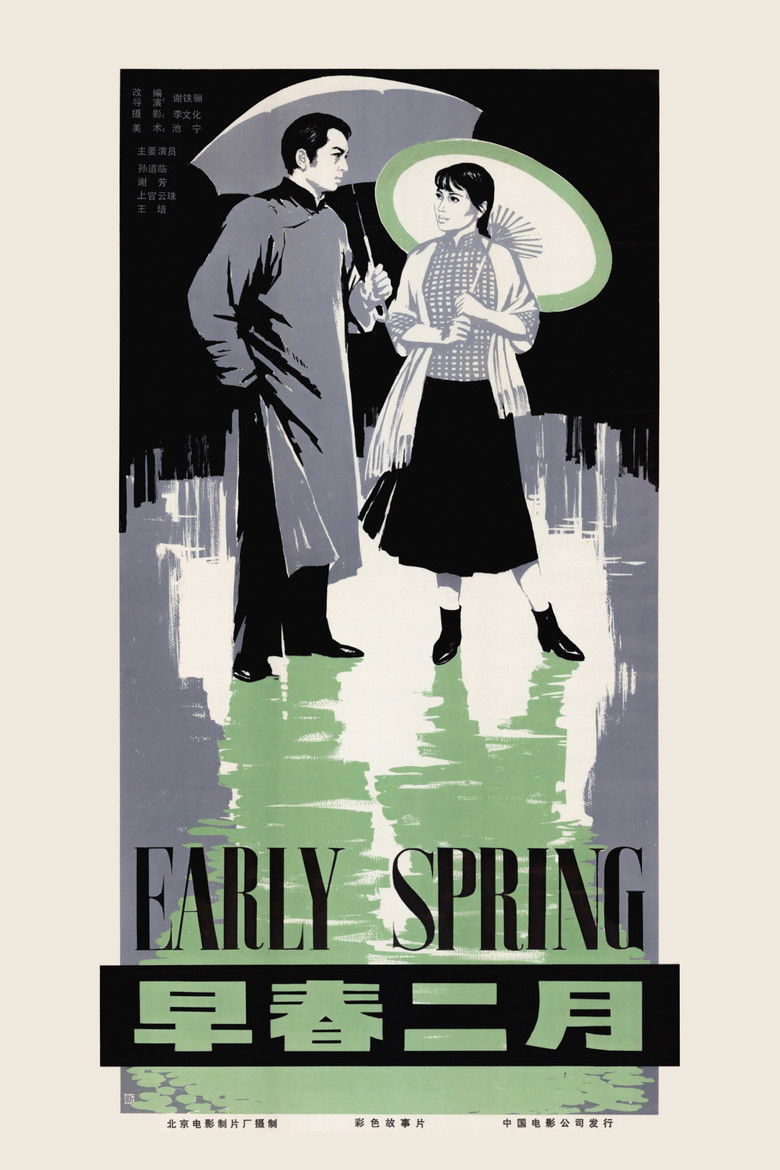
Early Spring
1963
Director
Xie Tieli
Runtime
120 minutes
Average Rating
No ratings yetSynopsis
An idealistic youth moves to the countryside in search of a purer, more honest society, but finds injustice even in his remote village.
Where to Watch
Diversity & Representation
Overall Score
Good
Category Breakdown
LGBTQ+ Representation
The film lacks explicit evidence of LGBTQ+ characters or non-heteronormative identities. The narrative focuses on traditional romantic and social structures within a rural setting.
Gender Representation
The story may challenge patriarchal certainties by highlighting injustices within the village system. The protagonist's search for a purer society suggests a deconstruction of rigid gendered expectations.
Racial & Ethnic Diversity
The cast is culturally homogenous, reflecting its specific historical context. However, the film explores class and regional identity by focusing on the struggles of the marginalized peasantry.
Religious & Cultural Diversity
The film prioritizes a critique of social institutions and community power dynamics. It challenges the idea of a perfect social order by focusing on local corruption and systemic injustice.
Disability Representation
There is no evidence regarding the portrayal of physical or neurodivergent disabilities in the narrative.
Strengths
- Thematic commitment to deconstructing social hierarchies and systemic injustice.
- Provides a nuanced critique of community power dynamics and local corruption.
- Explores the experiences of the marginalized peasantry through a lens of class identity.
Areas for Improvement
- Lack of visible LGBTQ+ representation or non-heteronormative identities.
- A culturally homogenous cast that reflects the limitations of its era.
- Absence of evidence regarding the portrayal of physical or neurodivergent disabilities.
AI Analysis
Early Spring is a nuanced historical drama that uses a rural setting to examine the friction between individual idealism and systemic corruption. Rather than presenting a sanitized view of village life, the film engages with the complexities of social hierarchies and the realities of the peasantry. The film's strength lies in its thematic commitment to deconstructing established authority. By centering the narrative on the search for honesty amidst injustice, it provides a platform for exploring marginalized experiences within a rigid social framework. However, the film is limited by its historical context, resulting in a lack of visible LGBTQ+ representation and a culturally homogenous cast. While it critiques class and power, it remains rooted in the traditional social structures of 1963.
Rate this Movie
Reviews
No reviews yet. Be the first to share your thoughts on this movie!
Use the rating form above to leave a star rating and optional review.