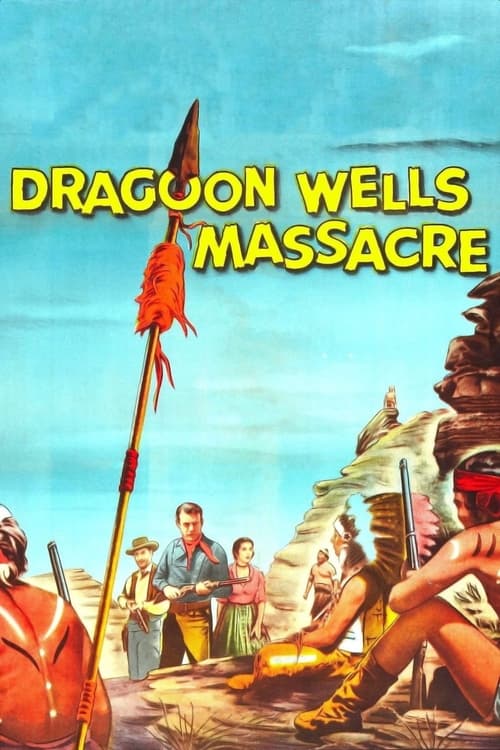
Dragoon Wells Massacre
1957
No user ratings available yet
Representation score: 0.8 out of 10

Representation Score
Minimal
1956
ApprovedDirector
Allen H. Miner
Runtime
77 minutes
Average Rating
No ratings yetNew Showbiz Analysis
The film opens on a stagecoach cutting through the open West, a symbol of white expansion that the camera treats as the natural order. As the passengers take refuge in the abandoned saloon of Pipestone, the narrative settles into a standard frontier survival mode where the white group must hold the line against the "savage" other. The sold meaning is clear: the frontier is a hostile space that requires the vigilance and moral superiority of the settlers to survive. The Cheyenne are the threat, and the ghost town is merely the backdrop for the white characters to assert their dominance. The film’s argument relies on the restoration of social order, with Duff emerging as the leader who protects Barbara and the group. The ending, where the group escapes and the mixed-race daughter is left behind, reinforces the idea that the white social unit is the priority. The camera lingers on the white faces, treating their survival as the moral victory, while the non-white characters are reduced to plot devices. The final image of the stagecoach moving toward Fort Kildare suggests a return to the safety of the established order, leaving the "wild" elements behind. This 1956 Western is a product of its era, reflecting the prevailing views on race and gender that were common in the genre. The film does not challenge these views but rather reinforces them, presenting a world where white men are the heroes and the frontier is a space to be tamed. The lack of diversity in the cast and the one-dimensional portrayal of the Cheyenne are typical of the time, but they still shape the film’s message. The film’s strength lies in its ability to capture the tension of the frontier, but its limitations in representation are significant.
Category Breakdown
Absent. The 1956 Western features strictly heterosexual pairings, with no queer characters or intimacy depicted.
Limited. Barbara is a passive passenger rescued by men, while Duff assumes leadership. Maureen, the mixed-race woman, remains a secondary figure.
Limited. Fire Knife and Maureen provide non-white presence, but the Cheyenne are framed as the external threat.
Traditional. The film treats the frontier as a space for white settlement, with the military and stagecoach line as order-bringers.
Absent. No characters with disabilities appear, and no impairment is depicted or discussed.
Present on Screen
Limited or Absent
Official Synopsis
A stage headed West with a group of passengers is attacked by Cheyenne Indians, and takes refuge in a nearby ghost town.
1957
1960
1956
1966
1956
1939
1953
1969
No reviews yet. Be the first to share your thoughts on this movie!
Use the rating form above to leave a star rating and optional review.