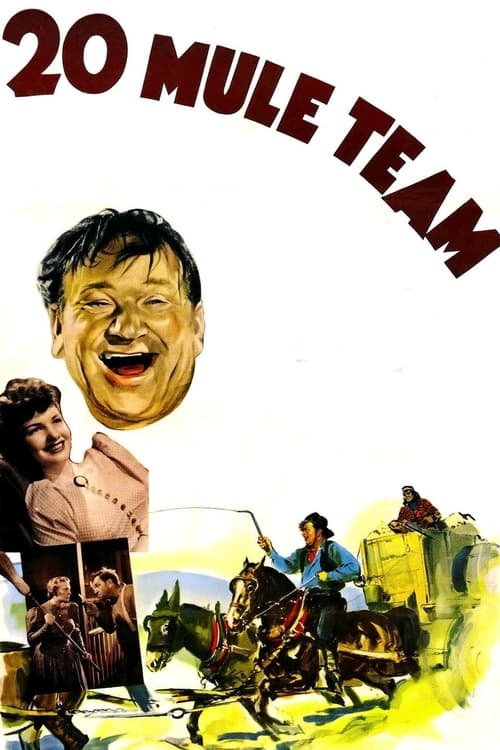
20 Mule Team
1940
No user ratings available yet
Representation score: 0.5 out of 10

Representation Score
Minimal
1956
ApprovedDirector
Josef Shaftel
Runtime
72 minutes
Average Rating
No ratings yetNew Showbiz Analysis
The Naked Hills is a conventional mid-century Western that emphasizes individualistic pursuits and traditional social hierarchies. The narrative is driven by the male protagonist's obsession with gold, which dictates the movement of the plot and the lives of those around him. Representation is limited by the era's clichés, focusing on a homogeneous group of characters. The film reinforces standard gender roles and lacks diverse ethnic or LGBTQ+ identities. Ultimately, the film functions as a typical genre piece that reflects the period's focus on Anglo-centric storytelling and patriarchal family structures.
Category Breakdown
The film centers on heterosexual romance between Tracy Powell and Julie. It does not include any non-cisgender identities or same-sex relationships.
The story follows a patriarchal path where the male protagonist drives the plot. Julie is portrayed as a reactive character defined by her relationship to the male lead.
The narrative focuses on a homogeneous group of prospectors and farmers. It lacks evidence of non-white characters or diverse ethnic groups within the Gold Rush setting.
Themes of individualism and capitalism drive the plot. The film adheres to traditional mid-century moral structures without challenging Western institutions.
The film provides no mention of characters with visible or invisible disabilities.
Present on Screen
Limited or Absent
Official Synopsis
Tracy Powell, an Indiana farmer, gets the gold fever and heads for Stockton, California in 1849. There, he abandons his first partner, Bert Killian, and teams up with Sam Wilkins, a claim jumper employed by Willis Haver. Six years later, Powell returns to Indiana and his sweetheart, Julie. They marry and he tries farming again but, on the night their son is born, he takes off again searching for gold. This time he heads for the hills with an inveterate prospector, Jimmo McCann. A decade later, the two are still hunting for their big strike when McCann is killed in an accident. Powell returns home with news of a big strike but the deserted Julie will have nothing to do with him. His friend Killian will not believe him but Haver, now a banker gives him a small loan and then beats him out of his claim. Many years pass before he comes home, now sixty-years-old, and this time, his wife and son open their home to him. But he vows to go prospecting come next spring.
1940
1956

1956
1954
1947
1960
1954
1967
No reviews yet. Be the first to share your thoughts on this movie!
Use the rating form above to leave a star rating and optional review.