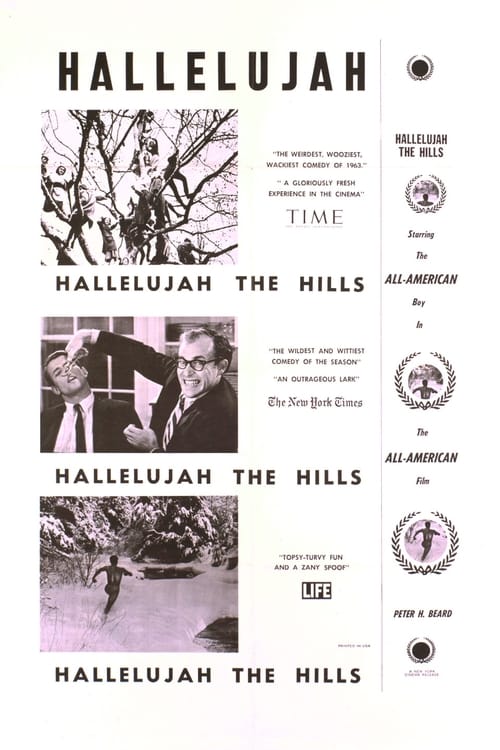
Hallelujah the Hills
1963
No user ratings available yet
Diversity score: 3.8 out of 10

1967
Director
Jan Němec
Runtime
71 minutes
Average Rating
No ratings yetSynopsis
This three-part ballad, which often uses music to stand in for dialogue, remains the most perfect embodiment of Nemec’s vision of a film world independent of reality. Mounting a defense of timid, inhibited, clumsy, and unsuccessful individuals, the three protagonists are a complete antithesis of the industrious heroes of socialist aesthetics. Martyrs of Love cemented Nemec’s reputation as the kind of unrestrained nonconformist the Communist establishment considered the most dangerous to their ideology.
Overall Score
Fair
Category Breakdown
LGBTQ+ Representation
The film lacks explicit LGBTQ+ characters or non-heteronormative identities. While it explores the complexities of desire, it stays within traditional romantic archetypes.
Gender Representation
The narrative disrupts gender hierarchies by centering a female protagonist against patriarchal forces. It critiques how social structures attempt to regulate and domesticate female agency.
Racial & Ethnic Diversity
Set within a localized, rural European community, the film lacks racial or ethnic diversity. The cast reflects a homogeneous social unit typical of its historical context.
Religious & Cultural Diversity
The film excels by portraying the village community as a violent, oppressive collective. It challenges the morality of organized social conformity and traditional institutions.
Disability Representation
There is no significant evidence of characters with visible or invisible disabilities. The focus remains on psychological and social dynamics rather than lived experiences of disability.
Strengths
Areas for Improvement
AI Analysis
Martyrs of Love is a sophisticated critique of monolithic social orders. It uses the tension between individual desire and communal regulation to deconstruct the perceived stability of traditional institutions. The film's strength lies in its intellectual subversion of social norms. However, the work lacks demographic breadth. The narrative is confined to a homogeneous European setting, offering little visibility for queer identities, diverse ethnicities, or characters with disabilities. Ultimately, the film trades demographic variety for deep thematic exploration. It prioritizes the subjective truth of the individual over the imposed morality of the collective.
1963

1991
1960
1964
1990

1965
1963

1986

1977
1966
No reviews yet. Be the first to share your thoughts on this movie!
Use the rating form above to leave a star rating and optional review.