The Zone of Interest
2023
No user ratings available yet
Representation score: 1.6 out of 10
Representation Score
Minimal
1978
NRDirector
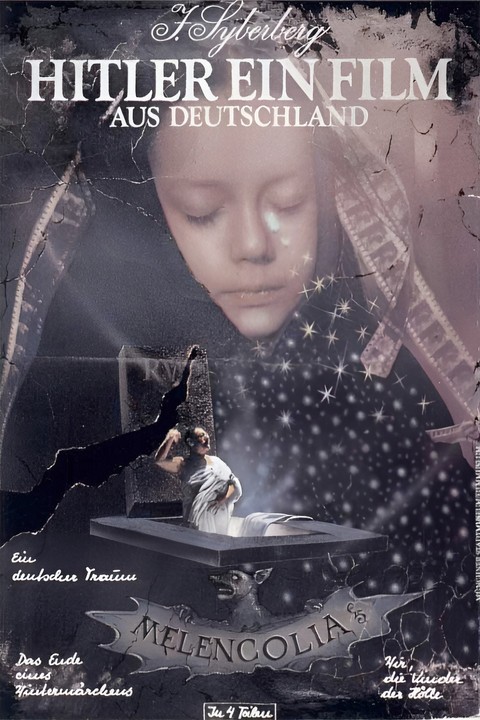
Hans-Jürgen Syberberg
Runtime
442 minutes
Average Rating
No ratings yetNew Showbiz Analysis
Syberberg’s film is a monumental essay that functions as a postmodern deconstruction of German national identity. It uses staged tableaux and historical montage to explore the intersection of myth and totalitarianism. Rather than a traditional narrative, it serves as an intellectual autopsy of the Third Reich. The film's primary strength lies in its sophisticated critique of how aestheticized politics and nationalistic myths fuel totalitarianism. It systematically dismantles the spectacle of the era, questioning how historical truth is constructed through spectacle. However, the work is narrow in its demographic scope. It lacks representation of LGBTQ+ individuals, people with disabilities, or diverse racial backgrounds, focusing instead on the exclusionary ideologies of the Nazi era.
Category Breakdown
The film does not include any LGBTQ+ characters or perspectives related to non-straight identities. Its focus on the hyper-masculine iconography of the Third Reich excludes queer viewpoints.
The movie emphasizes the hyper-masculine, monumental imagery of National Socialist propaganda. It examines the power dynamics of masculinity without challenging traditional gender roles.
The work focuses on the uniformity of the German national psyche and Nazi racial theories. While it includes historical footage of victims, these characters do not have significant roles in the story.
Syberberg effectively deconstructs how Germanic myths and spiritual traditions were weaponized. The film highlights how nationalism and state-driven religion were used as destructive myths.
The film does not portray any characters with visible or invisible disabilities having significant roles. The focus remains on ideological mechanisms and historical figures.
Present on Screen
Limited or Absent
Official Synopsis
A structure-free, four-part examination of the rise and fall of the Third Reich. Each part explores a different topic, from Hitler's cult of personality in propaganda to how said propaganda was associated with pre-Nazi German cultural, spiritual, and national heritage to the Holocaust and the ideology behind it, particularly from Himmler's point of view.
2023
1927
1992
1935
2004
1955
1962
1968
No reviews yet. Be the first to share your thoughts on this movie!
Use the rating form above to leave a star rating and optional review.