
East Punk Memories
2012
No user ratings available yet
Representation score: 5.6 out of 10
Representation Score
Good
2009
Director
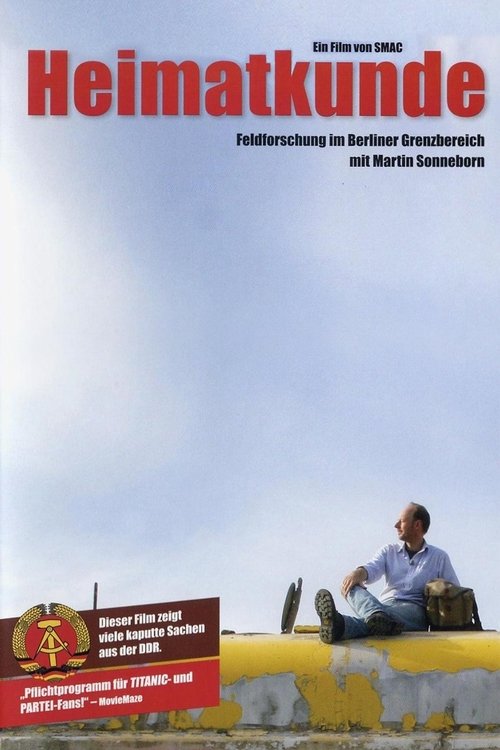
Martin Sonneborn, Andreas Coerper
Runtime
89 minutes
Average Rating
No ratings yetNew Showbiz Analysis
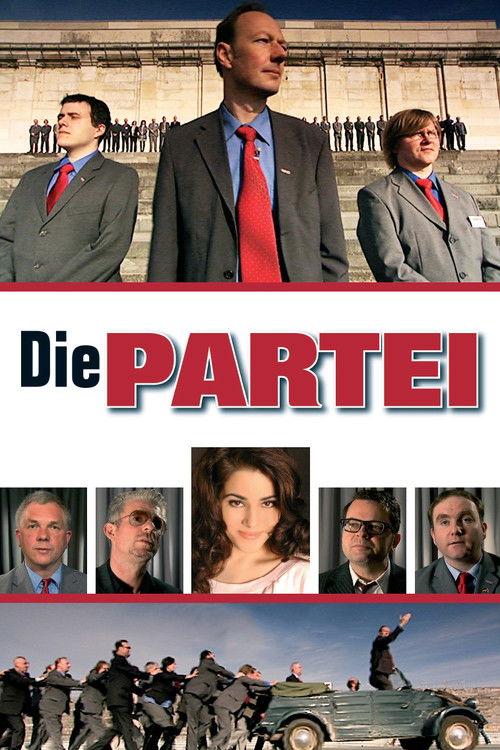
Die PARTEI operates as a postmodern critique of institutional power rather than a study of demographic diversity. Its primary impact is systemic, using a mockumentary format to dismantle the perceived legitimacy of the German political establishment. While the film scores low in specific identity-based categories like race, gender, and LGBTQ+ representation, it achieves high marks for cultural subversion. It successfully challenges the sanctity of the state and the competence of traditional parties like the SPD and CDU. Ultimately, the work prioritizes the deconstruction of bureaucratic authority over individual character-driven inclusion, making it a specialized political satire rather than a diverse social tapestry.
Category Breakdown
The film does not include explicit queer narratives or non-binary gender expressions. It satirizes political structures that assume everyone is straight, but it does not center LGBTQ+ identities.
The focus is on political satire rather than gendered character studies. It lacks the depth needed to challenge traditional gender roles through specific female-led or non-traditional masculine arcs.
The film primarily reflects a homogeneous demographic centered on the socioeconomic differences between East and West Germany. There is no indication of intentional racial blending in the cast.
The film excels at deconstructing Western institutions and lampooning the German political establishment. It uses absurdity to challenge the perceived truth of political rhetoric and state authority.
There is no evidence of characters with visible or invisible disabilities serving as central figures. The focus on political satire leaves little room for nuanced disability representation.
Present on Screen
Limited or Absent
Official Synopsis
20 years after the fall of the Wall, the economic crisis prevails. In the ruined peripheral areas of West Germany, resentment towards the new federal states is growing. The consequences of decades of uncontrolled transfers from West to East are now clearly visible: while the zone has the highest density of water parks in Europe and the East German cities are being pimped out with designer street lighting, entire city archives are collapsing in the run-down West and weeds are sprouting up on the pothole-strewn streets. The times when Merkel was still locked away behind the Wall and the Federal Republic was in full bloom are long gone. The former people's parties SPD and CDU are just as incapable of acting as the fun party FDP, only Die PARTEI continues to gain popularity and now has over 8,200 members. Is it Germany's last resort?
2012
2019
2010
1999
1992
2008
1990

2003
No reviews yet. Be the first to share your thoughts on this movie!
Use the rating form above to leave a star rating and optional review.