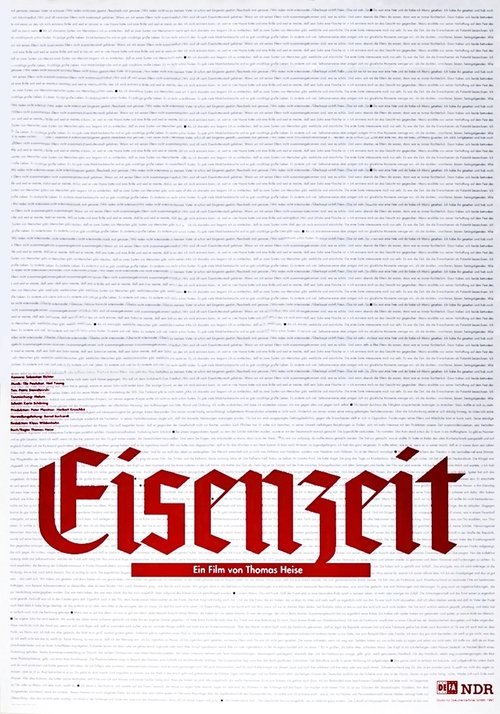
Iron Age
1991
No user ratings available yet
Representation score: 6.2 out of 10
Representation Score
Fair
1992
Director
Thomas Heise
Runtime
84 minutes
Average Rating
No ratings yetNew Showbiz Analysis
Thomas Heise’s documentary serves as a sociological study of systemic collapse in post-GDR Saxony-Anhalt. It captures the psychological fallout of political transition through the lens of aimless youth navigating dissolving certainties. The film's demographic intersectionality is limited by its specific historical and geographic setting. Because the region was largely homogeneous at the time, ethnic and LGBTQ+ representation remains low. However, the work achieves high marks for cultural critique. It effectively deconstructs the perceived permanence of institutional models and documents the friction of shifting power dynamics.
Category Breakdown
The film focuses on the socio-political dissolution of the GDR and the youth movement within housing estates. There is no explicit depiction of non-straight identities.
The narrative centers on a collective group of young people. While it explores the dissolution of traditional social structures, it lacks specific character arcs detailing gendered struggles.
Set in Saxony-Anhalt, the film reflects a period when the region had hardly any foreign residents. The narrative centers on a largely homogeneous population facing systemic change.
The documentary excels by critiquing institutional stability and state-sponsored certainties. It explores the fragility of socialist models and the rise of defensive, clear worldviews during the transition.
The provided context contains no specific information regarding the depiction of physical or neurodivergent disabilities.
Present on Screen
Limited or Absent
Official Synopsis
A group of young people in Halle-Neustadt moving aimlessly between the concrete blocks once built as a socialist model housing estate. Familiar certainties dissolved along with the GDR. Even though there were hardly any foreigners in Saxony-Anhalt, a dull aversion to everything that hadn’t been part of daily life until then began to spread. The general dissolution, perceived as a threat, is countered by apparently clear world views. When Thomas Heise won the “Documentary Film Prize 1992” at the Duisburger Filmwoche, the laudation ended with the assumption that the film would probably provoke disagreement. It turned out to be true.
1991
1999
1984
1989

2012
1985

2009
2012
No reviews yet. Be the first to share your thoughts on this movie!
Use the rating form above to leave a star rating and optional review.