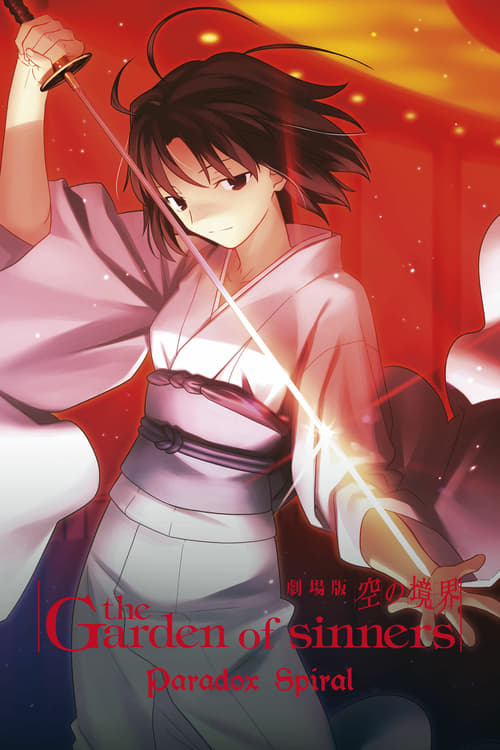
The Garden of Sinners: Paradox Spiral
2008
No user ratings available yet
Representation score: 6.5 out of 10

Representation Score
Good
2008
Director
Mitsuru Obunai
Runtime
58 minutes
Average Rating
No ratings yetNew Showbiz Analysis
The film excels at challenging traditional gender hierarchies by placing women at the center of its violent and intellectual conflicts. It avoids the trap of submissive femininity, presenting female characters as architects of their own destinies. However, the narrative remains culturally homogeneous and lacks explicit LGBTQ+ representation. The focus on a specific Japanese demographic limits its racial and ethnic breadth. Ultimately, the work is a study of psychological complexity and moral ambiguity. It uses sensory perception and trauma to drive its mystery, though it stays within a relatively narrow demographic scope.
Category Breakdown
The film does not explicitly depict same-sex relationships or non-cisgender identities. The tension between Shiki and Fujino is strong but does not confirm specific LGBTQ+ identities.
The story disrupts traditional gender roles by centering women's ability to act. Shiki and Fujino drive the plot with intellectual and physical strength, avoiding submissive stereotypes.
The setting and character archetypes reflect a culturally homogeneous Japanese context. There is no indication of a multi-ethnic cast or diverse representation.
The film explores moral relativism and subjective truths rather than traditional frameworks. It focuses on existentialism and the deconstruction of social norms through its dark, chaotic themes.
Physical and sensory anomalies drive the plot, particularly through the antagonist's relationship with pain. These elements serve as metaphors for trauma and tie into character's ability to drive the story.
Present on Screen
Limited or Absent
Official Synopsis
July 1998 - After a group of delinquents is found dead in their hangout place with all their limbs twisted and torn off, Aozaki Touko receives a request to find the murderer and asks Shiki for help. The main suspect is Asagami Fujino; a girl who was the boys' plaything until recently, who Shiki believes to be "one of her kind".
2008

2007
2009

2001
2007

2011

2008

1994
No reviews yet. Be the first to share your thoughts on this movie!
Use the rating form above to leave a star rating and optional review.