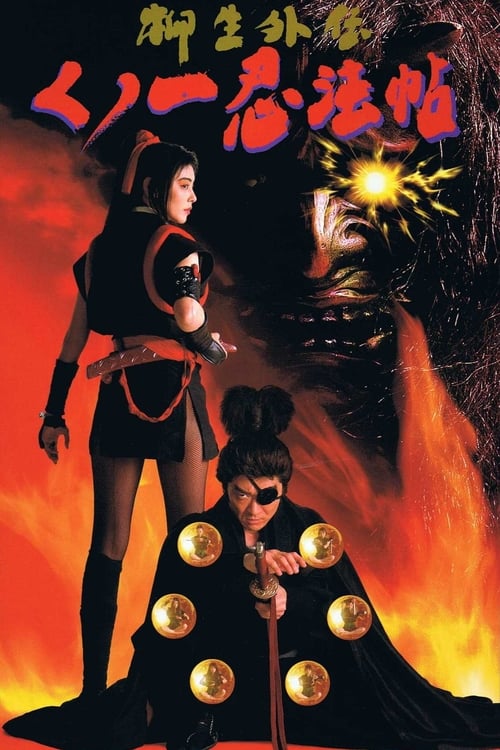
Female Ninjas Magic Chronicles: Legend of Yagyu Part 1
1998
No user ratings available yet
Representation score: 5.1 out of 10

Representation Score
Limited
2008
Director
Gô Ohara
Runtime
78 minutes
Average Rating
No ratings yetNew Showbiz Analysis
Geisha Assassin is a genre-driven action film centered around a female protagonist's struggle against established martial hierarchies. While it places a woman in a combat-heavy role, the narrative remains narrow in its scope. The film relies heavily on traditional Edo-period clichés. It serves as a culturally specific historical piece rather than a complex exploration of identity or social critique. Ultimately, the film prioritizes revenge-driven action over disrupting systemic hierarchies, focusing on a singular, traditional character arc.
Category Breakdown
The film focuses on a revenge arc involving a geisha and her opponents. There are no representations of LGBTQ+ identities or same-sex relationships.
Kotono disrupts traditional gender roles by being the main source of violence against male samurai. This highlights her significant role in the high-stakes martial conflict.
Set during the Edo period, the film features a Japanese cast and setting. It maintains historical authenticity without presenting racial blending or challenging ethnic norms.
The story follows standard period-piece genre conventions. It does not explicitly deconstruct traditional social structures or promote specific secular or anti-capitalist critiques.
The narrative contains no mention of characters with visible or invisible disabilities. There is no representation of neurodivergent individuals.
Present on Screen
Limited or Absent
Official Synopsis
One rainy night in the Edo period, Kotono (a geisha) confronts samurais who killed her father. The samurais attack her one after another, but she fights hard against samurais with her sword. Kotono tries to chase the samurais who scramble to escape. Yet now three ninjas stand up against her. Kotono drops her sword by their wave of assaults. Can she beat them?
1998

1972
2007

1972
2005
1980
2020

2009
No reviews yet. Be the first to share your thoughts on this movie!
Use the rating form above to leave a star rating and optional review.