
The Child Woman
1980
No user ratings available yet
Diversity score: 5.5 out of 10
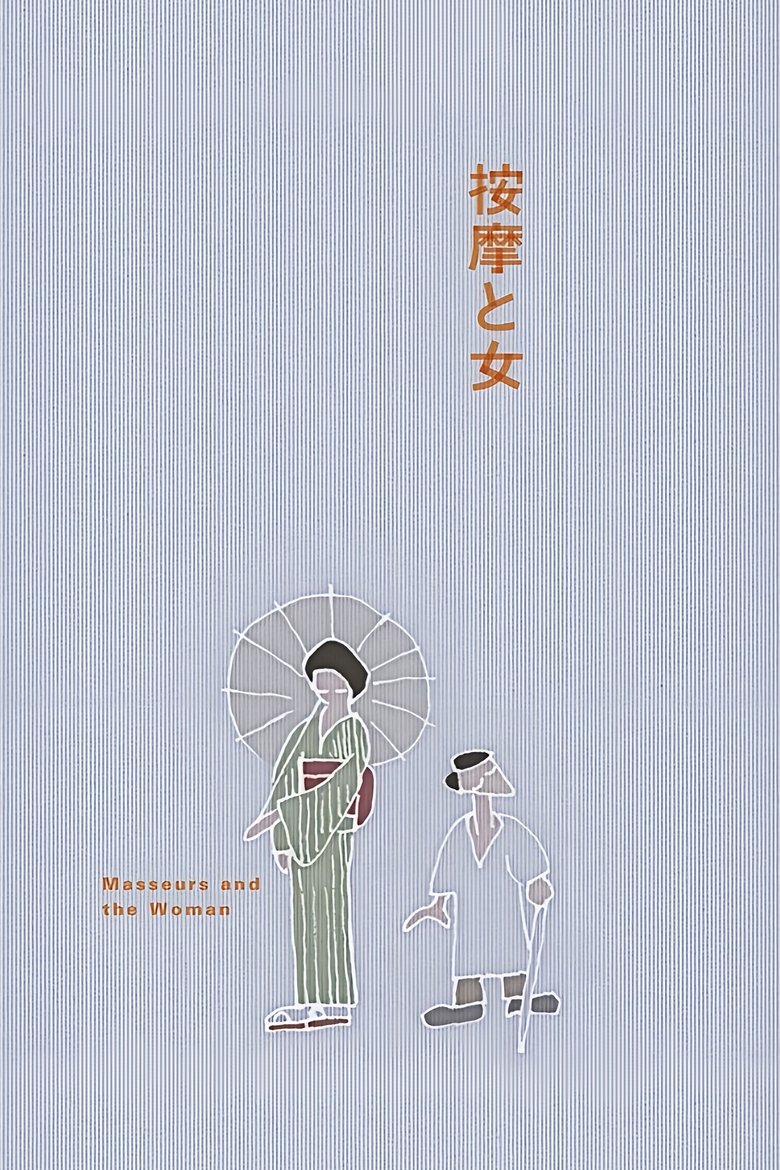
1938
Director
Hiroshi Shimizu
Runtime
66 minutes
Average Rating
No ratings yetSynopsis
A pair of blind masseurs, an enigmatic city woman, a lonely man and his ill-behaved nephew—The Masseurs and a Woman is made up of crisscrossing miniature studies of love and family at a remote resort in the mountains. With delicate and surprising humor, Hiroshi Shimizu paints a timeless portrait of loneliness and the human need to connect.
Overall Score
Fair
Category Breakdown
LGBTQ+ Representation
The film focuses on traditional romantic entanglements and interpersonal dynamics. There is no evidence of queer narratives or non-cisnormative identities, remaining within the heteronormative frameworks of the era.
Gender Representation
Female agency is present through an enigmatic city woman who navigates her own desires. While women are not merely domestic fixtures, the film still adheres to certain period-typical gendered social expectations.
Racial & Ethnic Diversity
The cast is culturally homogeneous, reflecting pre-war Japanese cinema. It offers a localized, non-Western perspective on the human condition rather than the Anglo-centric views dominant in the global canon.
Religious & Cultural Diversity
The narrative adopts a humanist, secular approach to morality. It prioritizes the mundane rhythms of working-class life over grand religious or patriotic institutions, avoiding idealized family tropes.
Disability Representation
Blind masseurs serve as central characters with significant agency. Their visual impairment is treated as a lived, functional reality rather than a tragic plot device or a source of mockery.
Strengths
Areas for Improvement
AI Analysis
Hiroshi Shimizu’s work excels in its humanistic portrayal of the working class, specifically through the dignified depiction of characters with disabilities. The blind masseurs drive the narrative through their professional skills and emotional intelligence, avoiding common tropes of pity. However, the film operates within the social constraints of its time. It lacks LGBTQ+ representation and maintains a culturally homogeneous cast, which limits its intersectional breadth by modern standards. Ultimately, the film's strength lies in its focus on individual agency and the subtle exploration of human connection within a rigid social structure.
1980
2020

2023
2005

1957

2022

2001
2014

1995

1948
2007

2016
No reviews yet. Be the first to share your thoughts on this movie!
Use the rating form above to leave a star rating and optional review.