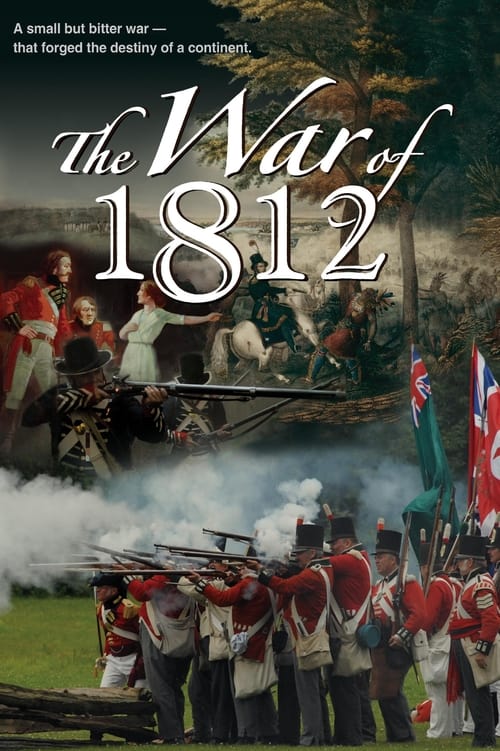
The War of 1812
2011
No user ratings available yet
Representation score: 3.7 out of 10

Representation Score
Limited
2006
TV-PGDirector
Jim Lindsay
Runtime
89 minutes
Average Rating
No ratings yetNew Showbiz Analysis
The documentary stands out by presenting a balanced historical inquiry rather than a single, dominant perspective. By showing the conflict from both sides, it disrupts the usual 'victor's history' often seen in Western-centric media. While the film excels at deconstructing geopolitical power dynamics and addressing the complexities of expansionism, it remains limited by the traditional social structures of its subject matter. It lacks visible representation for gender and LGBTQ+ identities, which is common for historical military documentaries. Ultimately, the film offers a nuanced critique of American exceptionalism. It replaces celebratory national milestones with a more complex look at the consequences of territorial conquest.
Category Breakdown
The documentary does not include any explicit LGBTQ+ characters or themes. Given the mid-19th-century setting, the narrative adheres to the social norms of that time.
The film focuses on masculine leadership and the political strategies of President James K. Polk. It does not challenge traditional gender roles or highlight female perspectives within the conflict.
The production achieves high marks by using a dual-perspective framework that looks at the war from both U.S. and Mexican viewpoints. Having Oscar de la Hoya as a host helps center a non-Anglo perspective.
The documentary challenges the idea of 'Manifest Destiny' by framing territorial expansion as an act of force. This approach shifts the narrative from national progress to a critique of systemic imposition and imperialism.
There is no information about the portrayal of physical or neurodivergent disabilities within the available material.
Present on Screen
Limited or Absent
Official Synopsis
One of the most controversial conflicts in U.S. history, the Mexican-American War erupted as President James K. Polk sought to extend the borders of the nation to the Pacific, taking by force whatever territory stood in the way. This special, produced by The History Channel and hosted by Oscar de la Hoya, looks at the war from the perspective of both countries, and chronicles the fighting from its inception to its conclusion with the Treaty of Guadalupe Hidalgo.
2011
2012
2019
2005
2004
2007
1992
2004
No reviews yet. Be the first to share your thoughts on this movie!
Use the rating form above to leave a star rating and optional review.