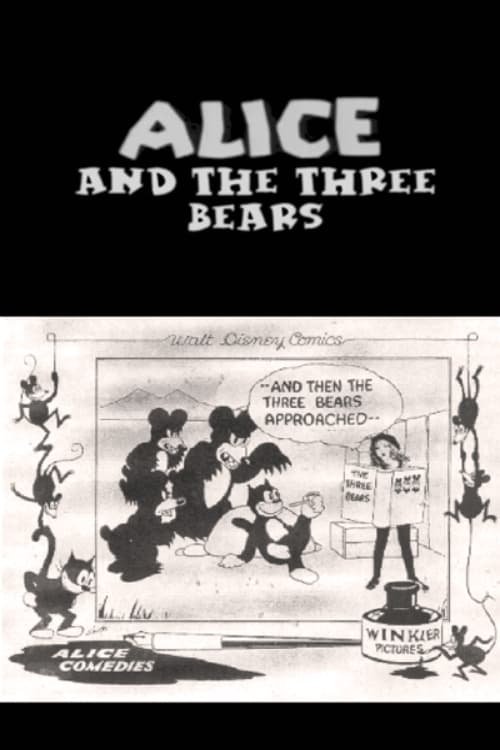
Alice and the Three Bears
1924
No user ratings available yet
Representation score: 1.8 out of 10
Representation Score
Minimal
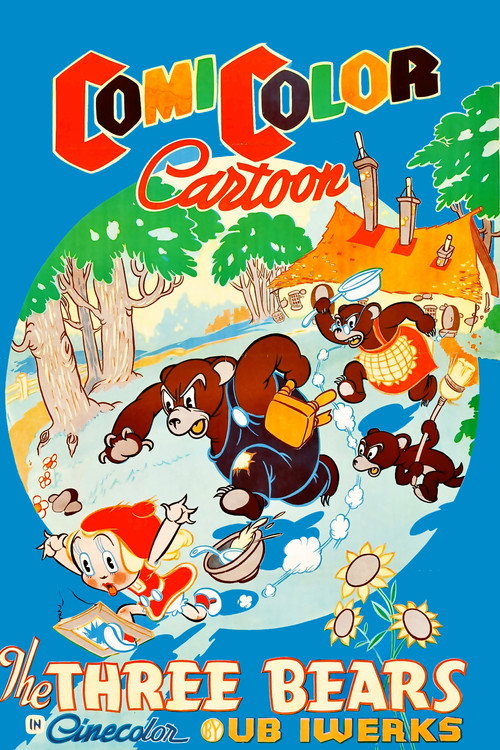
1935
ApprovedDirector
Ub Iwerks
Runtime
8 minutes
Average Rating
No ratings yetNew Showbiz Analysis
This 1935 animation by Ub Iwerks reflects early 20th-century storytelling conventions. It relies heavily on established folklore clichés to convey a simple, cautionary narrative. The film does not intentionally include diverse identities or complex social frameworks. Instead, it focuses on a singular protagonist and a traditional family unit. Overall, the work reinforces conventional social norms without challenging them, resulting in a low diversity score.
Category Breakdown
The film centers around a straight protagonist and a bear family, with no representation of LGBTQ+ or non-binary identities. There is no depiction of same-sex intimacy or diverse gender expressions.
Goldilocks is the main character, but her role is limited to disruptive behavior typical of an unruly child. She does not challenge traditional gender roles.
The story uses anthropomorphic animals, which simplifies racial complexity. Characters reflect the homogeneity typical of 1930s animation.
The narrative follows a Western folk tale structure, emphasizing the sanctity of the home and property. It serves as a conventional cautionary tale about respecting boundaries.
No characters have visible or invisible disabilities. Disability is not used as a plot device in the film.
Present on Screen
Limited or Absent
Official Synopsis
Playing hide-and-seek with her dog, young Goldilocks scampers away into the woods and stumbles upon a lovely little house. Unbeknownst to her, a family of bears live there. The bears, however, have gone to do something in the woods. Goldilocks spills their food, breaks their furniture, and generally creates havoc in their house, before settling in for a nap in the one remaining usable bed. What she doesn't know is that the bears are coming back, and when they get back.......
1924
1951
1955
1934
1954
1942
1939
1955
No reviews yet. Be the first to share your thoughts on this movie!
Use the rating form above to leave a star rating and optional review.