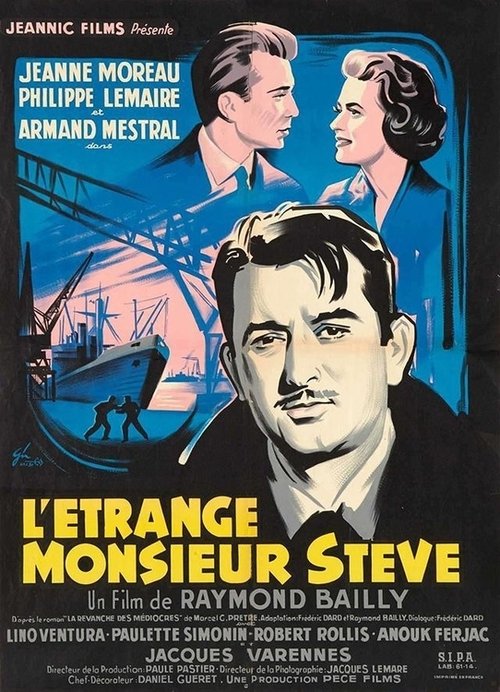
The Strange Mr. Steve
1957
No user ratings available yet
Diversity score: 2.8 out of 10
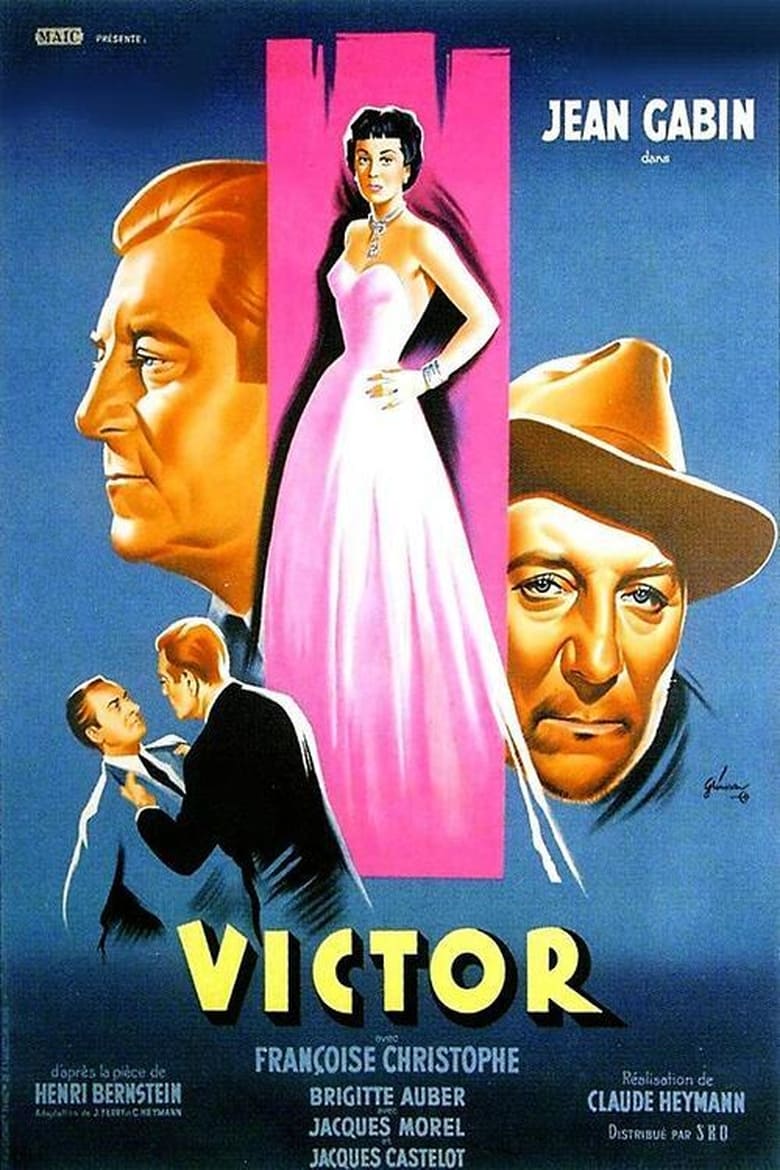
1951
Director
Claude Heymann
Runtime
90 minutes
Average Rating
No ratings yetSynopsis
Secretly in love with Françoise, the companion of his best friend Marc, Victor decides to go to prison in his place.
Overall Score
Limited
Category Breakdown
LGBTQ+ Representation
The film features a character harboring a secret love, hinting at repressed emotional dynamics. However, there is no explicit evidence of non-cisnormative identities or a critique of heteronormativity.
Gender Representation
The plot centers on male agency and the protagonist's sacrificial decision. Françoise serves primarily as an object of desire, reinforcing traditional gender roles and masculine archetypes.
Racial & Ethnic Diversity
The narrative follows a conventional Western dramatic structure typical of 1951. There is no evidence of a diverse cast or the subversion of era-specific casting norms.
Religious & Cultural Diversity
The story explores moral complexity through a character's choice to violate legal structures. It lacks a broader critique of Western family or institutional systems.
Disability Representation
The film contains no mention of characters with visible or invisible disabilities.
Strengths
Areas for Improvement
AI Analysis
Victor is a mid-century drama focused on themes of sacrifice and unrequited desire. The narrative centers on a high-stakes moral dilemma where a protagonist chooses self-sacrifice to preserve a social bond and a romantic connection. While the film explores nuanced personal emotions, it lacks intersectional complexity. The story appears to align with the social and cinematic constraints of its era, offering a conventional dramatic structure rather than systemic critique. Ultimately, the film functions as a character study of personal longing rather than a progressive exploration of diverse identities or social structures.
1957

1949
1953
1934
1956
1963
1955

1972
1946
1969

1985

1965
No reviews yet. Be the first to share your thoughts on this movie!
Use the rating form above to leave a star rating and optional review.