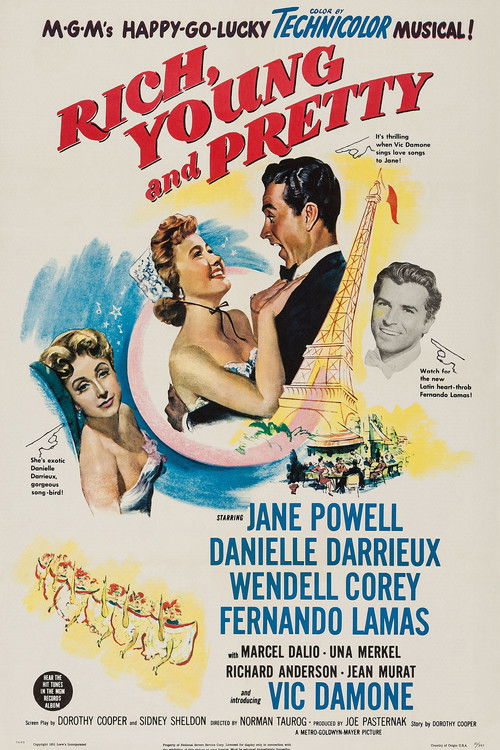
Rich, Young and Pretty
1951
No user ratings available yet
Representation score: 2.0 out of 10
Representation Score
Fair
1955
Director
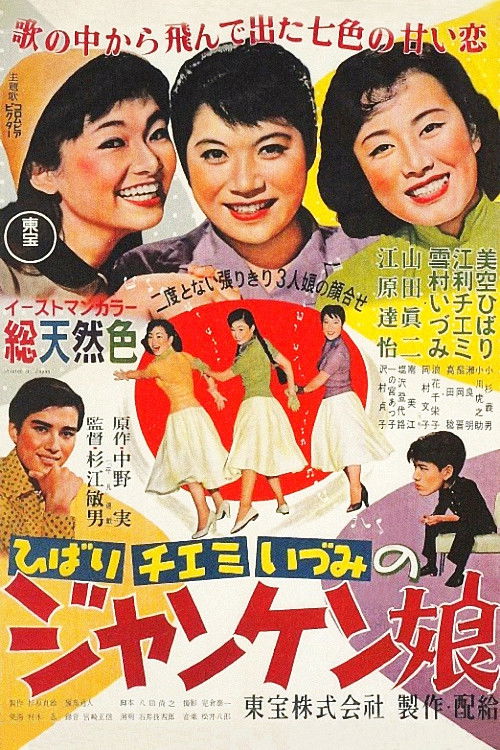
Toshio Sugie
Runtime
92 minutes
Average Rating
No ratings yetNew Showbiz Analysis
So Young, So Bright is a mid-century musical comedy that emphasizes the adventures of three young women during a school trip. It places the female characters at the forefront, granting them primary ability to act in driving the story forward. However, the film reflects the demographic limitations of its time, presenting a largely homogeneous social landscape. It does not explicitly address LGBTQ+ identities or characters with disabilities. Overall, the film captures the essence of post-war Japanese youth culture, highlighting social cohesion and a positive outlook on life through a gender-focused lens.
Category Breakdown
The film focuses on three female characters, Ruri, Yumi, and Hinagiku, but does not explicitly show any queer identities or same-sex relationships.
The story breaks traditional gender roles by centering on the ability to act and friendships of young women, rather than male-led narratives.
As a Japanese production, the film presents a homogeneous social landscape, offering a specific look at Japanese youth identity during a transformative era.
The narrative uses the school trip cliché to highlight post-war youth culture and social exploration, reflecting an optimistic and secular outlook.
The film does not mention any characters with visible or invisible disabilities.
Present on Screen
Limited or Absent
Official Synopsis
Two high school girls, Ruri and Yumi, go to Kyoto on a school trip, here they get acquainted with Hinagiku, there are many adventures ahead of the three of them. A musical starring 3 Japanese pop music and TV stars.
1951
2005
1965

2005
1938
1997
1992
1954
No reviews yet. Be the first to share your thoughts on this movie!
Use the rating form above to leave a star rating and optional review.