The Margin
1976
No user ratings available yet
Diversity score: 5.9 out of 10
1979
Director
Walerian Borowczyk
Runtime
109 minutes
Average Rating
No ratings yetSynopsis
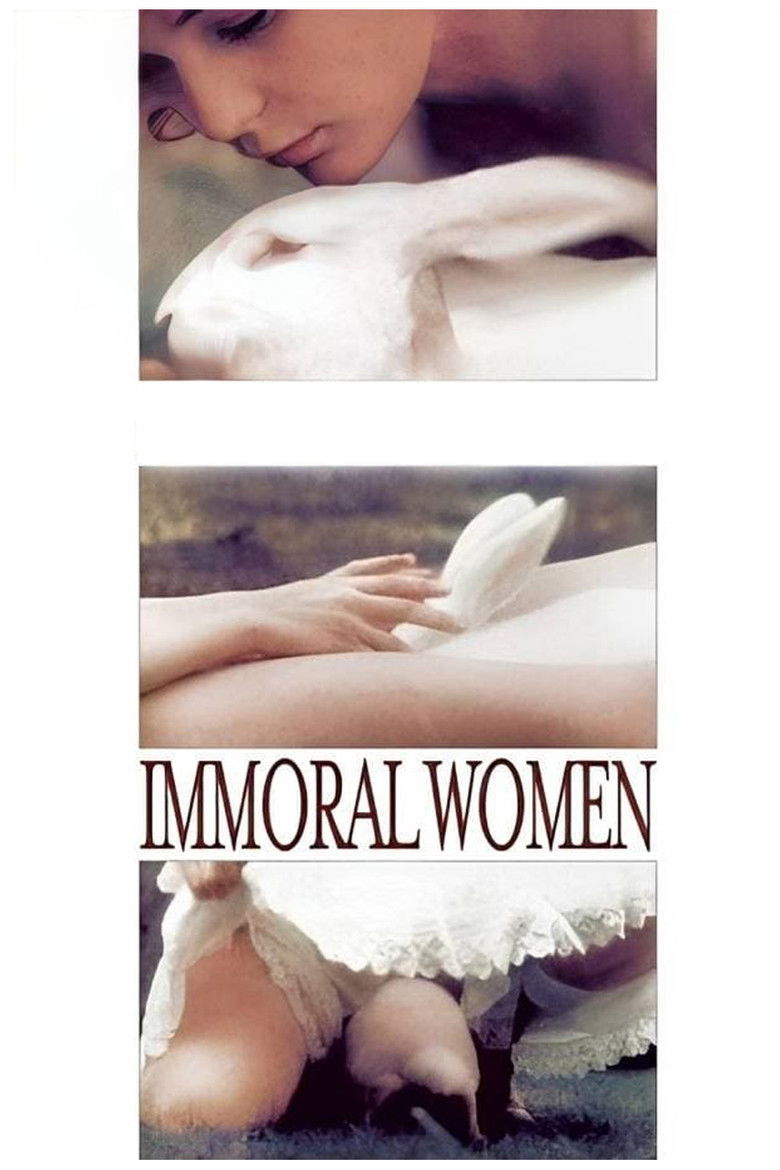
The first episode – featuring frequent Borowczyk muse Marina Pierro – is the longest and, in a way, most substantial: it’s set in Renaissance Rome, with the lusty (and perpetually nude) leading lady sexually involved with famous painters and church benefactors. The second episode is the most notorious and, consequently, gave the film its controversial poster – featuring a rabbit slowly disappearing under the skirt of a teenage girl (played by Gaelle Legrand). The third and final episode, which has a modern-day setting, is the shortest – but also, possibly, the most outrageous: Pascale Christophe is a young married woman who’s abducted on a busy Parisian street by a small-time hood hidden inside a cardboard box!
Overall Score
Fair
Category Breakdown
LGBTQ+ Representation
The film lacks explicit depictions of non-heteronormative identities or queer-coded narratives. It focuses primarily on heteronormative sexual transgressions and individualistic pleasure.
Gender Representation
The narrative centers on female sexual autonomy and agency, particularly in the Renaissance segment. Protagonists drive their own erotic arcs, challenging conventional depictions of female submissiveness.
Racial & Ethnic Diversity
Casting is largely homogeneous, reflecting the specific European aristocratic and historical settings. The film does not employ diverse casting to disrupt its historical contexts.
Religious & Cultural Diversity
The film excels in critiquing traditional Western institutions. It portrays religious and social structures through a lens of decadence, framing traditional morality as an obstacle to be bypassed.
Disability Representation
There is no discernible evidence regarding the portrayal of physical or neurodivergent disabilities within the film's narrative or thematic overview.
Strengths
Areas for Improvement
AI Analysis
Walerian Borowczyk’s *Immoral Women* is a transgressive exploration of desire that deconstructs traditional moral hierarchies. Through an episodic structure, the film rejects a cohesive moral compass in favor of a relativistic approach to human behavior. The work succeeds in subverting gendered power dynamics by prioritizing female agency. However, it lacks intersectional breadth, offering very little in the way of racial or LGBTQ+ representation. Ultimately, the film functions as a cinematic critique of social constraints. It uses the dissolution of order and the subversion of religious institutions to frame individualistic transgression as a central human experience.
1976
1974

1975
1992

1971
1969
1966
1968
1969
1987
1967

1969
No reviews yet. Be the first to share your thoughts on this movie!
Use the rating form above to leave a star rating and optional review.