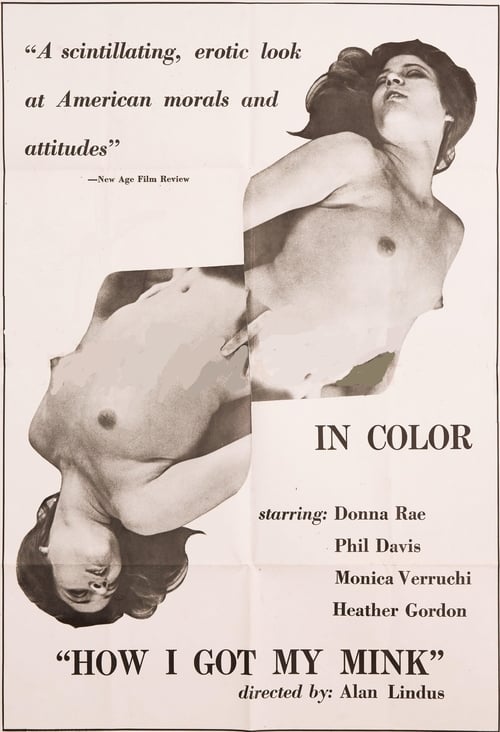
How I Got My Mink
1969
No user ratings available yet
Representation score: 5.8 out of 10

Representation Score
Fair
1969
Director
Nick Millard
Runtime
59 minutes
Average Rating
No ratings yetNew Showbiz Analysis
L'amour de femme acts as a period piece reflecting the shifting sexual mores of the late 1960s. It succeeds in challenging traditional gender hierarchies by centering its narrative on female protagonists who navigate their own social and economic landscapes. While the film offers a critique of established Western social norms through its depiction of communal living, it remains limited by a lack of racial and ethnic variety. The focus stays strictly within a homogeneous, affluent subculture. Ultimately, the film is a study of the era's deconstruction of the nuclear family. It trades conservative domesticity for a more fluid, secular lifestyle, even if it lacks explicit LGBTQ+ or disability representation.
Category Breakdown
The film hints at queer-coded themes through communal living and a swinging lifestyle. However, it does not explicitly confirm same-sex intimacy or non-straight identities.
The narrative centers on women's ability to drive their social environment. By making women the primary drivers of their social world, the film moves away from traditional submissive domesticity.
The story focuses on a specific, affluent Western subculture. There is no evidence of a multi-ethnic cast, appearing instead to prioritize a homogeneous upper-class social scene.
The film challenges traditional family units by highlighting secularism and communal living. It replaces conventional morality with a framework of hedonism and moral relativism.
There is no information available regarding the inclusion or portrayal of characters with disabilities.
Present on Screen
Limited or Absent
Official Synopsis
Innovative sixties softcore. Lenore and Suzanne are swinging 60s chicks who share a swank apartment and a Lincoln Continental financed by their rich, bankrolling daddies.
1969

1956
1972

1969
1966

1969
1970
1968
No reviews yet. Be the first to share your thoughts on this movie!
Use the rating form above to leave a star rating and optional review.