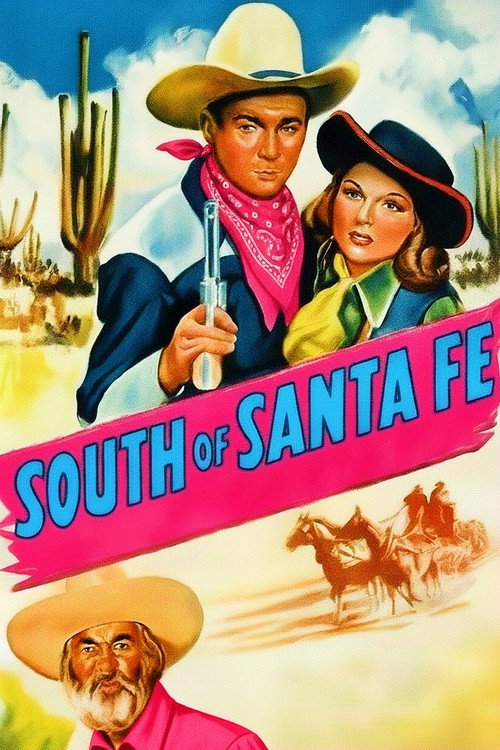
South of Santa Fe
1942
No user ratings available yet
Diversity score: 2.7 out of 10
No Poster Available
1936
PassedDirector
Jacques Jaccard
Runtime
55 minutes
Average Rating
No ratings yetSynopsis
A band of renegades attacks and loots a mission, stealing some priceless treasures. Local citizens blame an outlaw known as "The Hawk," who is also called "The Phantom of Santa Fe."
Overall Score
Limited
Category Breakdown
LGBTQ+ Representation
The film lacks any evidence of LGBTQ+ characters or non-heteronormative narratives. It adheres to the strict social and cinematic codes of 1936.
Gender Representation
Agency is almost exclusively granted to male protagonists and antagonists. Female characters likely occupy passive roles within the local citizenry, reinforcing traditional gender hierarchies.
Racial & Ethnic Diversity
While the Santa Fe setting suggests indigenous presence, ethnic groups likely serve as background elements. The film relies on the homogeneous casting standards of the era.
Religious & Cultural Diversity
The plot centers on a mission and religious treasures, reinforcing traditional Western notions of law and social order. It lacks any subversive cultural perspectives.
Disability Representation
There is no mention of characters with visible or invisible disabilities within the narrative.
Strengths
Areas for Improvement
AI Analysis
Phantom of Santa Fe is a quintessential 1930s B-movie Western that prioritizes traditional genre tropes over social complexity. The narrative focuses on a standard conflict between lawless renegades and established social institutions, such as the local mission. The film reinforces the era's social hierarchies by centering male-driven action and utilizing ethnic settings primarily as atmospheric backdrops. It lacks intersectional depth or agency for marginalized groups. Ultimately, the production serves as a baseline example of mid-century Hollywood Westerns, adhering to the period's conventional morality tales and rigid social codes.
1942
1939
1930
1935
1918
1948
1941
1935
1950
1941
1943

1946
No reviews yet. Be the first to share your thoughts on this movie!
Use the rating form above to leave a star rating and optional review.