
Pàtria
2017
No user ratings available yet
Representation score: 2.7 out of 10
Representation Score
Limited
2011
Director
Chema de la Peña
Runtime
105 minutes
Average Rating
No ratings yetNew Showbiz Analysis
This historical drama prioritizes political accuracy and institutional tension over modern identity-based storytelling. The narrative is constrained by its subject matter, which inherently emphasizes the traditional hierarchies of 1981 Spain. Consequently, the representation of gender, race, and sexuality reflects the era's conservative social and political structures rather than attempting to subvert them.
Category Breakdown
The film focuses on political maneuvering within the Congress of Deputies without any explicit LGBTQ+ character arcs or critiques of the assumption that everyone is straight or cisgender. It likely reflects the conservative social landscape of 1981 Spain.
The story is dominated by male-centric military and political hierarchies. Without women driving the political resolution, they likely occupy secondary or supportive roles.
The cast appears ethnically homogeneous, reflecting the demographic makeup of the Spanish political and military elite during the crisis. There is no indication of non-white protagonists used to challenge the historical status quo.
The film functions as a study of institutional crisis and the defense of democratic capitalism. It prioritizes national stability and the rule of law over anti-establishment or anti-Western critiques.
The focus remains strictly on the political and military actors involved in the coup. There is no evidence regarding the inclusion of characters with physical or neurodivergent disabilities.
Present on Screen
Limited or Absent
Official Synopsis
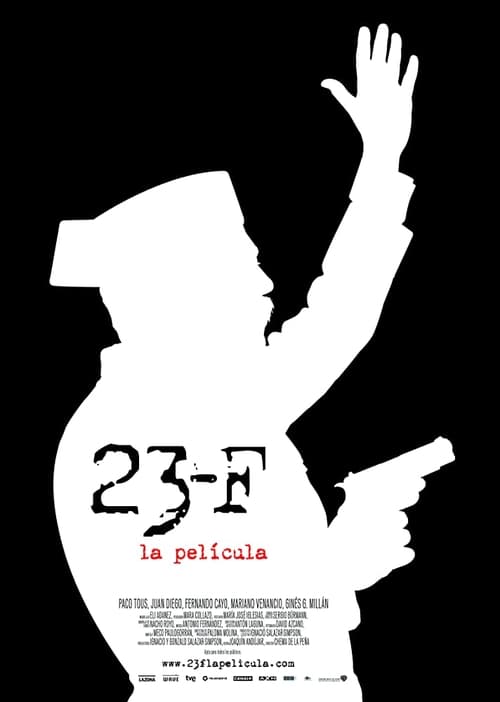
The failed coup d'état of February 23, 1981, which began with the capture of the Congress of Deputies and ended with the release of parliamentarians, put at serious risk the Spanish democracy.
2017

2011

2013

2015
2014

2012

1976

2002
No reviews yet. Be the first to share your thoughts on this movie!
Use the rating form above to leave a star rating and optional review.