
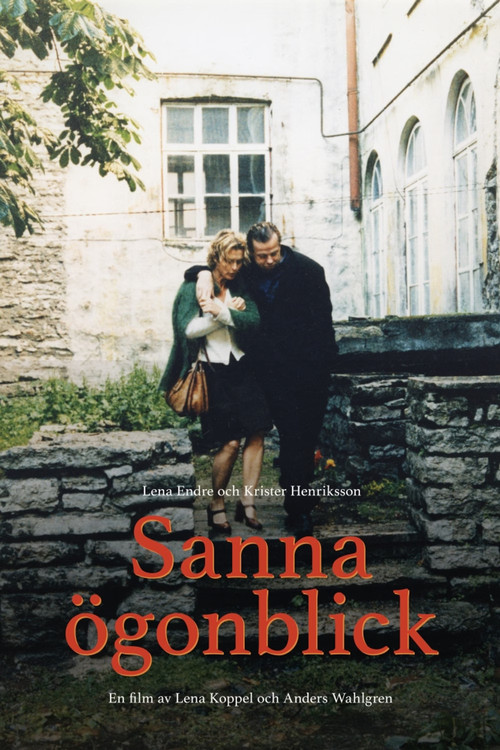
Wings of Glass
2000
No user ratings available yet
Representation score: 6.3 out of 10
Representation Score
Good
1998
Director
Lena Koppel, Anders Wahlgren
Runtime
86 minutes
Average Rating
No ratings yetNew Showbiz Analysis
True Moments succeeds as a sophisticated drama that uses a personal romance to question nationalistic and historical certainties. By intertwining the legacies of Nazi occupation and Communist influence, the film avoids simplistic heroics in favor of a nuanced critique of systemic corruption. The film's strength lies in its exploration of ethnic diversity through the Estonian-Swedish dynamic. It moves away from a homogeneous Scandinavian perspective to highlight the complexities of multi-ethnic identities. However, the film remains limited by its focus on a traditional heterosexual central romance. While it challenges conventional family structures, it does not provide explicit representation for LGBTQ+ identities.
Category Breakdown
The film focuses on a heterosexual relationship between Erik and Viivi. While it doesn't explicitly include queer identities, it explores unconventional family histories and challenges traditional family structures.
Viivi is portrayed as a skilled professional whose actions drive the plot forward. The narrative shifts power away from the male protagonist, who is destabilized by his past.
The story moves beyond a monocultural Nordic perspective by highlighting an Estonian-Swedish dynamic. Casting diverse actors adds a multi-ethnic layer to the film.
The film critiques systemic power by examining the impacts of Nazi and Communist regimes. It portrays institutions like the state and family as sources of trauma rather than stability.
There are no visible representations of physical or neurodivergent disabilities in the film.
Present on Screen
Limited or Absent
Official Synopsis
By chance Erik meets Viivi, an Estonian violinist playing in the Stockholm subway. They start an intense romance. Erik's mother dislikes the relationship, not having forgotten her escape from Estonia during the war. She reveals facts from the past and Erik finds out that his Swedish father adopted him. His real father was an Estonian nazi. Viivi has grown up in communist Estonia where her father was a party member and worked for the KGB.
2000

2018

2002
2002

2017

2021

2000

2012
No reviews yet. Be the first to share your thoughts on this movie!
Use the rating form above to leave a star rating and optional review.