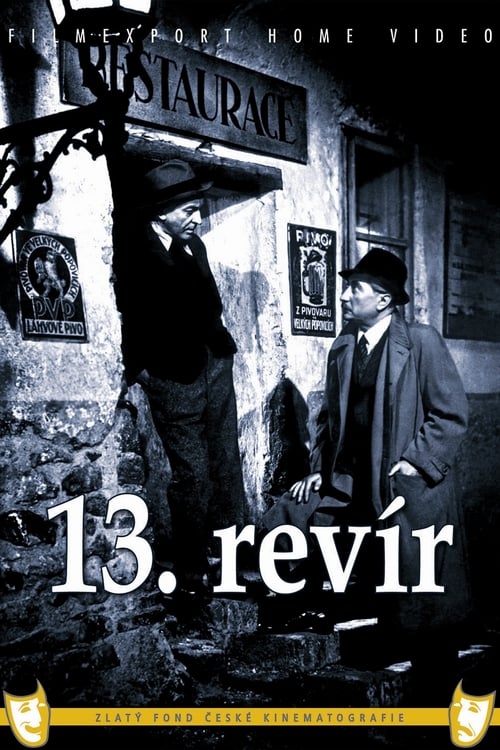
13th district
1946
No user ratings available yet
Diversity score: 3.1 out of 10

1951
Director
Erich Freund
Runtime
82 minutes
Average Rating
No ratings yetSynopsis
After Jochen saves police officer Erich's life, the two men become close friends and Erich helps Jochen get a job working for Berlin's local train system. But Jochen falls into the hands of the beautiful West Berlin agent Ellen, who convinces him to participate in acts of sabotage against the trains. All of a sudden, Jochen is making a lot more money and even Erich's former girlfriend Inge becomes interested in him. But everything begins to unravel when Erich observes his friend's illegal activity on one of his nightly rounds.
Overall Score
Limited
Category Breakdown
LGBTQ+ Representation
The film focuses on heteronormative dynamics, centering on the friendship between Jochen and Erich. There is no evidence of non-cisnormative identities or same-sex intimacy.
Gender Representation
Ellen provides a sense of agency as a manipulator, though she functions primarily as a classic femme fatale. Inge appears as a traditional romantic interest.
Racial & Ethnic Diversity
The narrative reflects the homogeneous demographic of 1951 Berlin. There is no indication of a multi-ethnic cast or non-white characters.
Religious & Cultural Diversity
The story explores crime and sabotage within a localized urban setting. It prioritizes moral conflicts regarding civic duty over systemic cultural critiques.
Disability Representation
The plot contains no mention of characters with visible or invisible disabilities or neurodivergence.
Strengths
Areas for Improvement
AI Analysis
Zugverkehr unregelmäßig is a product of its era, adhering strictly to the social and demographic norms of 1950s German crime cinema. The narrative relies on established genre tropes rather than attempting to challenge or expand social hierarchies. The film's character archetypes, such as the femme fatale and the law-abiding officer, reinforce conventional gender and social roles. It lacks the intersectional depth required to represent a diverse range of identities. Ultimately, the film serves as a period-specific crime drama that prioritizes plot-driven tension over the representation of marginalized groups.
1946
1952
1953
1954
1955
1952
1947
1960
1950
1957
1940
1947
No reviews yet. Be the first to share your thoughts on this movie!
Use the rating form above to leave a star rating and optional review.