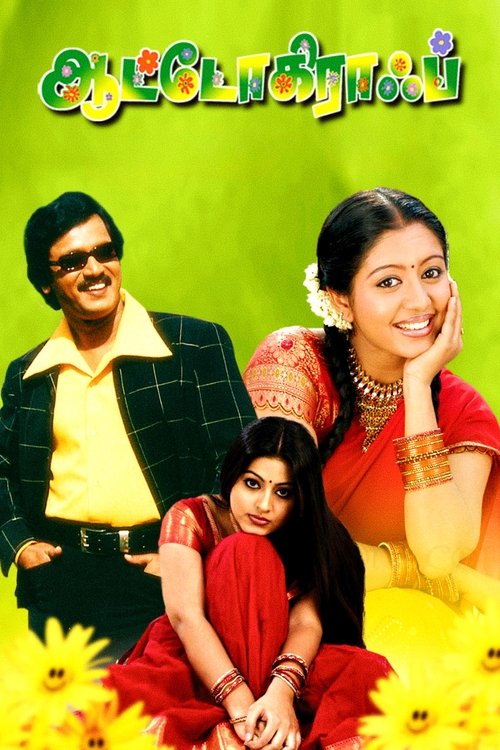
Autograph
2004
No user ratings available yet
Diversity score: 4.8 out of 10

1965
Not RatedDirector
Vijay Anand
Runtime
183 minutes
Average Rating
No ratings yetSynopsis
A tourist guide meets an unhappy married woman who wants to take up dancing. With his motivation, she becomes a successful dancer but success corrupts the man's mind.
Overall Score
Good
Category Breakdown
LGBTQ+ Representation
The film operates within a traditional heteronormative framework. It focuses on romantic and spiritual bonds between primary protagonists rather than queer narratives.
Gender Representation
Rosie provides a significant disruption of gender hierarchies by abandoning a restrictive marriage to pursue dance. Her journey subverts domestic archetypes through her pursuit of self-actualization.
Racial & Ethnic Diversity
The cast reflects diverse socioeconomic strata of mid-century India. It avoids Western-centric casting, prioritizing indigenous social structures and localized cultural nuances.
Religious & Cultural Diversity
The narrative explores moral relativism and the fluidity of identity. It critiques Westernized intellectualism in favor of a lived, communal, and spiritual reality.
Disability Representation
The film does not feature characters with visible or invisible disabilities as central plot drivers.
Strengths
Areas for Improvement
AI Analysis
Vijay Anand's *Guide* is a sophisticated study of character evolution that challenges conventional social roles. Its primary strength lies in its refusal to provide easy, binary moral answers, instead exploring the tension between individual agency and societal expectation. The film excels in its portrayal of female autonomy through Rosie, whose transition from a submissive wife to a professional artist subverts patriarchal constraints. This provides a powerful counter-narrative to the era's typical domestic archetypes. However, the film remains rooted in a traditional heteronormative structure, offering little space for non-cisnormative identities. While culturally rich and locally grounded, it lacks representation for characters with disabilities.
2004
2012

1969

2016
1967

1993

1993
1952
2000
1961
1998
1975
No reviews yet. Be the first to share your thoughts on this movie!
Use the rating form above to leave a star rating and optional review.