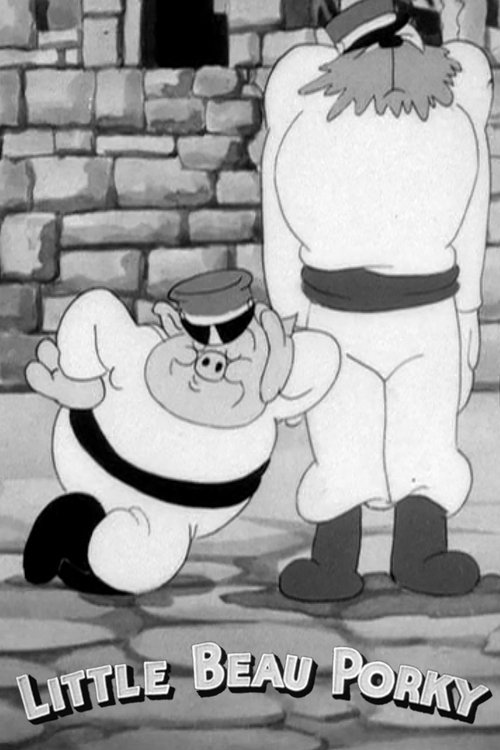
Little Beau Porky
1936
No user ratings available yet
Diversity score: 1.5 out of 10

1938
Director
Frank Tashlin
Runtime
8 minutes
Average Rating
No ratings yetSynopsis
The Crocadero nightclub. Porky has his diploma from the Sucker Correspondence School of music, and has dreams of being a bandleader, but he's broke. He gets a job at the club washing dishes. His boss mistakes Porky going after a fly for loafing and fires him. His bandleaders don't show, and he brings Porky back to impersonate several famous bandleaders.
Overall Score
Minimal
Category Breakdown
LGBTQ+ Representation
The film lacks any depiction of non-heteronormative identities or same-sex intimacy. The narrative focuses entirely on professional and economic themes.
Gender Representation
The story centers on a single male protagonist navigating a traditional labor hierarchy. There is no evidence of female characters or gendered power dynamics.
Racial & Ethnic Diversity
The setting suggests a standard mid-century urban environment but lacks a diverse cast. The characters appear to follow homogeneous archetypes typical of the era.
Religious & Cultural Diversity
The film explores themes of economic struggle and the instability of capitalism. However, it follows a conventional path of individualistic achievement through performance.
Disability Representation
There is no indication of neurodivergence or physical disability. Neither Porky nor the supporting cast represent these themes.
Strengths
Areas for Improvement
AI Analysis
Porky at the Crocadero is a period-typical comedic short that prioritizes slapstick and situational irony over social commentary. The narrative follows a 'zero-to-hero' arc centered on a male protagonist's pursuit of professional ambition amidst economic hardship. While the film touches on the precariousness of the working class, it remains within the conventional storytelling norms of the late 1930s. It does not engage with intersectional identities or challenge established social hierarchies. Ultimately, the work focuses on individual agency and social mobility through talent, rather than disrupting systemic structures or providing diverse representation.
1936
1943
1949
1936
1937
1941

1941
1939
1953
1932
1935

1962
No reviews yet. Be the first to share your thoughts on this movie!
Use the rating form above to leave a star rating and optional review.