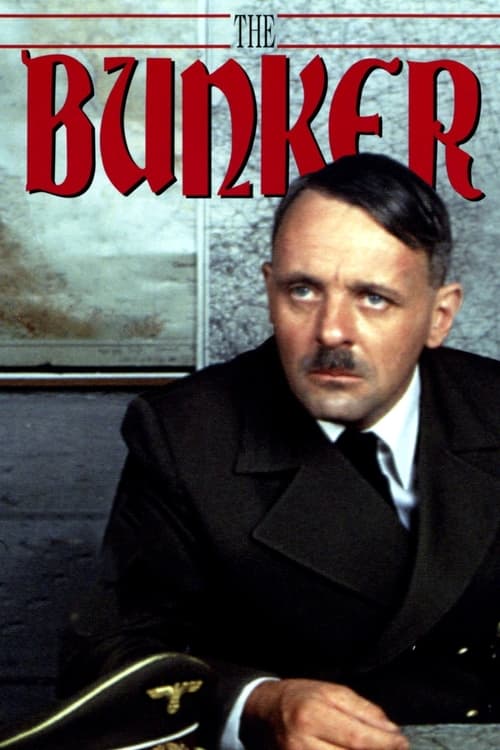
The Bunker
1981
No user ratings available yet
Representation score: 0.3 out of 10
Representation Score
Minimal
1955
Director
G.W. Pabst
Runtime
107 minutes
Average Rating
No ratings yetNew Showbiz Analysis
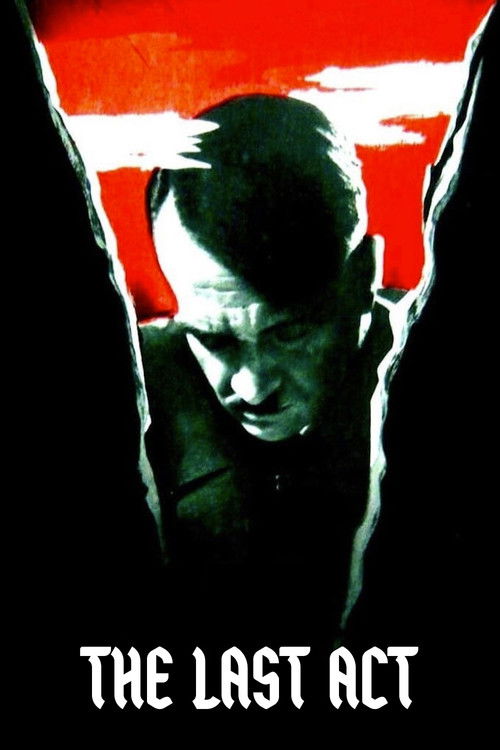
The Last Act is a historical drama centered on the psychological collapse of Adolf Hitler and the disintegration of the Nazi regime. The narrative structure emphasizes the internal dynamics of the military hierarchy and the bunker leadership. Due to the film's adherence to the demographic constraints of its historical setting, it lacks diverse identities. The focus remains on a homogeneous group of political and military figures during the final days of the Third Reich. Ultimately, the film serves as a study of a specific political collapse, using traditional masculine-coded structures without offering diverse representation or progressive narrative expansion.
Category Breakdown
The film focuses exclusively on the political and military collapse of the Nazi regime. There are no depictions of same-sex relationships or non-binary gender identities.
The story centers on male-dominated spheres such as the bunker leadership and military officer corps. It lacks evidence of women playing significant roles or challenging traditional gender hierarchies.
The cast and narrative scope appear homogeneous, focusing on the Anglo-Germanic political elite. There is no indication of diverse casting or racial diversity within the central power structure.
The film explores the collapse of the Third Reich through a traditional historical lens. It examines a specific Western institutional catastrophe rather than a broader critique of systemic values.
There is no information available regarding the portrayal of physical or neurodivergent disabilities in this production.
Present on Screen
Limited or Absent
Official Synopsis
Albin Skoda embodies a frantic Adolf Hitler in his last days, scrambling to keep the Third Reich alive as morale within the bunker wanes and Berlin is encircled by enemy troops. Based on Michael A. Musmanno's book Ten Days to Die, Oscar Werner costars as fictional Nazi Hauptmann Wüst, a disillusioned middleman.
1981

1966
1973

1957

1955

1951

1945

2006
No reviews yet. Be the first to share your thoughts on this movie!
Use the rating form above to leave a star rating and optional review.