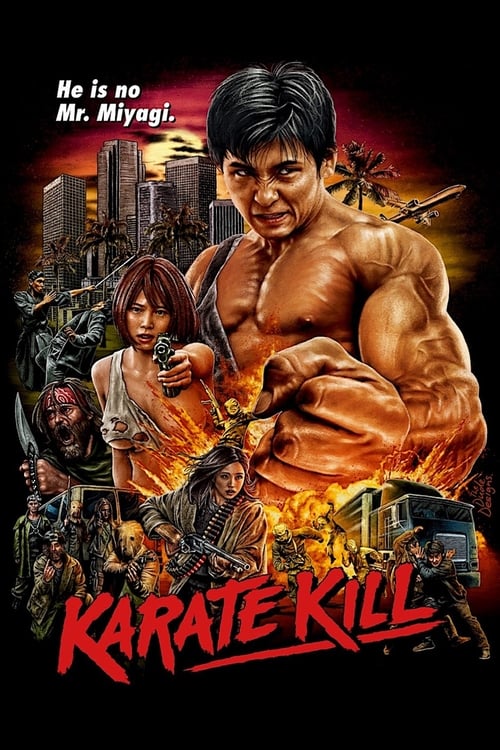
Karate Kill
2016
No user ratings available yet
Diversity score: 3.9 out of 10

2011
Director
Yoshikatsu Kimura
Runtime
92 minutes
Average Rating
No ratings yetSynopsis
In Okinawa, Ayaka Kurenai was born in the world’s greatest legendary Karate family. When she was a child, her family was attacked by a mysterious gang that seeks legendary black belt. Her father Soujiro Kurenai was killed and her younger sister was taken in front of her. Time has passed. In Yokohama, she was spending her life as a normal high school girl, hiding her real name and her status as a heir of the legendary Karate family. However, one incident brought her a fateful encounter with her sister who was separated in their childhood. But, her sister was raised as a heartless killing machine by the mysterious gang who took her. .
Overall Score
Fair
Category Breakdown
LGBTQ+ Representation
The film lacks any visible LGBTQ+ characters or narratives. The story focuses strictly on familial bonds and martial arts conflict.
Gender Representation
Ayaka Kurenai serves as a powerful female protagonist with significant physical agency. She subverts traditional action tropes by occupying the role of the family heir and protector.
Racial & Ethnic Diversity
The setting utilizes specific Japanese locales like Okinawa and Yokohama. While the cast appears homogeneous, the Okinawan heritage adds regional cultural depth.
Religious & Cultural Diversity
The plot explores the tension between traditional Karate lineage and corrupt external organizations. It centers on the preservation of family legacy against systemic disruption.
Disability Representation
There is no evidence of characters representing physical or neurodivergent disabilities within the narrative.
Strengths
Areas for Improvement
AI Analysis
Karate Girl is a genre-driven action film that finds its strength in subverting gendered power dynamics. By centering a female heir in a martial arts lineage, the film grants the protagonist significant agency and physical expertise. However, the film remains largely focused on a homogeneous Japanese context. While it utilizes regional Okinawan identity, it does not explore multi-ethnic perspectives or intersectional social critiques. Ultimately, the film functions as a traditional action piece. It succeeds in challenging gender hierarchies through its protagonist but lacks broader representation in terms of LGBTQ+ identities or disability.
2016

2008

1987
2018
1986
2019

2020
2009
2010
2021

1985
2005
No reviews yet. Be the first to share your thoughts on this movie!
Use the rating form above to leave a star rating and optional review.