The Contact
1990
No user ratings available yet
Representation score: 2.9 out of 10
Representation Score
Good
1977
Director
Nobuhiko Obayashi
Runtime
100 minutes
Average Rating
No ratings yetNew Showbiz Analysis
Nobuhiko Obayashi’s work uses surrealism to explore memory and perception, prioritizing subjective experience. This film succeeds in centering a female protagonist's internal struggle with physical impairment, moving beyond superficial depictions of disability. However, the film is limited by its 1970s Japanese production context. It lacks LGBTQ+ representation and ethnic diversity, adhering to the homogeneous cultural framework of its time. Ultimately, the film's strength lies in its philosophical approach to sensory relativism. It treats the protagonist's altered reality as a meaningful, isolating experience rather than a mere plot device.
Category Breakdown
The film does not explicitly depict LGBTQ+ identities or relationships outside of traditional heterosexual norms. Instead, it focuses on physical trauma and sensory experiences without exploring queer dynamics.
The story centers around a female protagonist dealing with a life-changing injury. While it delves into her internal psychological response, it maintains a traditional power dynamic between a female patient and a male doctor.
As a 1977 Japanese production, the film operates within a culturally homogeneous framework. It lacks diverse casting but offers a localized perspective consistent with its era and setting.
The film explores subjective reality and the fallibility of human perception. It deconstructs objective truth by centering on a mysterious figure visible only to the protagonist.
Disability serves as the central catalyst for the protagonist's journey. The film avoids clichés by focusing on the profound, destabilizing psychological impact of losing sight in one eye.
Present on Screen
Limited or Absent
Official Synopsis
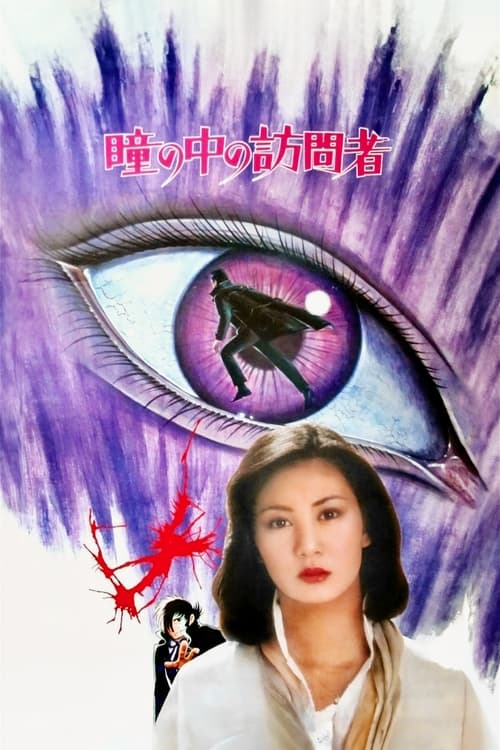
Komori Chiaki is a budding tennis student. However, one day while training, her coach hits a ball into her eye on accident. At the hospital, the news that she will never regain the sight in her eye leaves her heartbroken. As a last resort, she undergoes a costly surgery from the mysterious doctor known as Black Jack, where after a successful operation, a mysterious figure starts to emerge in her vision, and only she can see it.
1990
1963
1993
1966
2006

2004

1980
1978
No reviews yet. Be the first to share your thoughts on this movie!
Use the rating form above to leave a star rating and optional review.