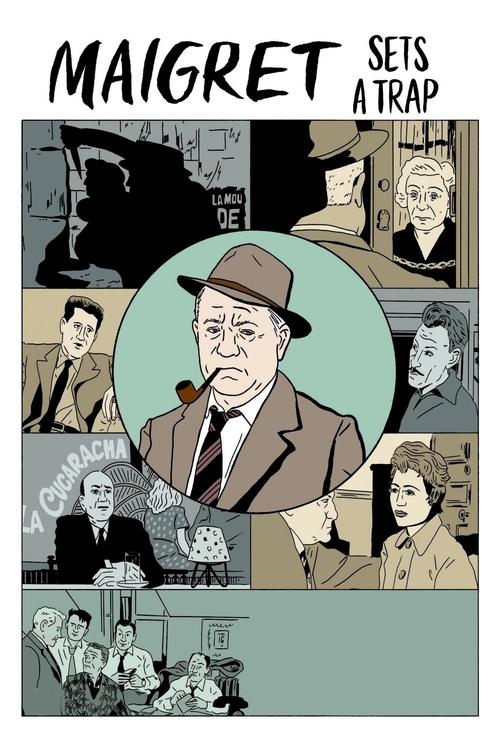
Maigret Sets a Trap
1958
No user ratings available yet
Representation score: 0.3 out of 10
Representation Score
Minimal
1959
Director
Jean Delannoy
Runtime
98 minutes
Average Rating
No ratings yetNew Showbiz Analysis
Jean Delannoy’s film is a quintessential product of its era, adhering to the formalist traditions of mid-century European cinema. It prioritizes classical narrative structures and the preservation of social order through state authority. The production reinforces traditional hierarchies, centering the plot on patriarchal figures and homogeneous social classes. This results in a film that mirrors the demographic and social landscape of 1959 France without challenging its norms. Ultimately, the work functions as a traditional police procedural. It lacks the diverse casting and multi-layered depth needed to challenge the established social structures of the period.
Category Breakdown
The film does not include any LGBTQ+ characters or themes. The social environment is strictly heterosexual, reflecting the mid-century standards of French provincial life.
Jules Maigret serves as the central patriarchal figure and intellectual leader. Female characters mainly play domestic or socialite roles, acting as plot catalysts rather than independent agents.
The cast and setting are predominantly white, reflecting the historical context of 1959 France. The narrative lacks diverse casting or non-white characters with significant influence.
The story emphasizes institutional stability and respect for state authority. It functions as a classic detective procedural that aims to restore social equilibrium without critiquing it.
There is no representation of physical, sensory, or neurodivergent disabilities. Characters are depicted through the lens of standard physical capability without any narrative integration of disability.
Present on Screen
Limited or Absent
Official Synopsis
Police Commissioner Jules Maigret returns to the small village where he spent his childhood at the request of the Countess of Saint-Fiacre, who has received a disturbing anonymous letter.
1958
1947
1964
1942
1949
1948

1964

1974
No reviews yet. Be the first to share your thoughts on this movie!
Use the rating form above to leave a star rating and optional review.