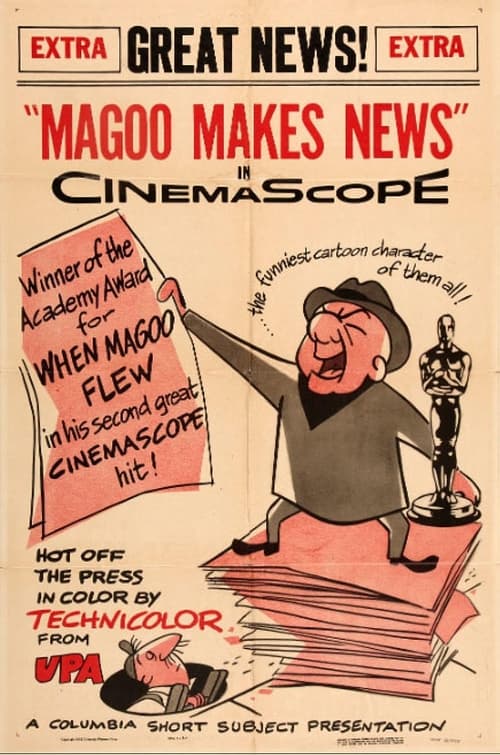
Magoo Makes News
1955
No user ratings available yet
Representation score: 1.8 out of 10
Representation Score
Minimal
1955
ApprovedDirector
Pete Burness
Runtime
6 minutes
Average Rating
No ratings yetNew Showbiz Analysis
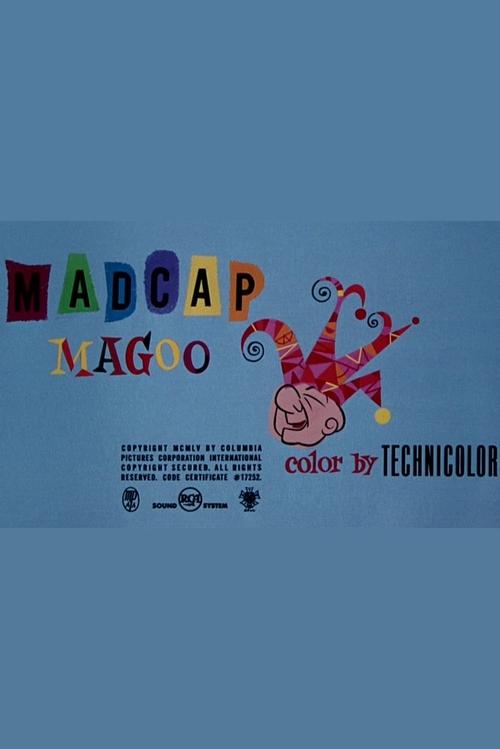
Madcap Magoo reflects its 1955 origins, emphasizing traditional comedic structures over social complexity. The film lacks depth in representing diverse identities, focusing instead on a homogeneous, male-dominated world. While Mr. Magoo's visual impairment adds a layer of disability representation, it is primarily used for situational humor. The film does not engage with progressive social frameworks or the deconstruction of established cultural hierarchies, staying true to mid-century norms.
Category Breakdown
The film does not include any LGBTQ+ characters or non-cisgender identities. The story focuses solely on the interactions between the main character and the plot.
The short film centers around male characters and does not feature any female characters. This limits the exploration of women's ability to drive the story and challenges to gender norms.
The film lacks significant racial or ethnic diversity. It portrays a homogeneous mid-century urban environment without efforts to include diverse casting.
The humor in the film arises from situational misunderstandings rather than critiques of power structures. It adheres to the social norms of its time without addressing religious or systemic issues.
Mr. Magoo's visual impairment drives the comedy. Despite his disability, he demonstrates a significant role in driving the story in navigating his environment. However, his disability is also used for slapstick humor.
Present on Screen
Limited or Absent
Official Synopsis
Expecting a visit from his practical joker friend Smiley, Mr. Magoo instead entertains an escaped mental patient.
1955
1960
1956
1951
1941
1956
1955
1958
No reviews yet. Be the first to share your thoughts on this movie!
Use the rating form above to leave a star rating and optional review.