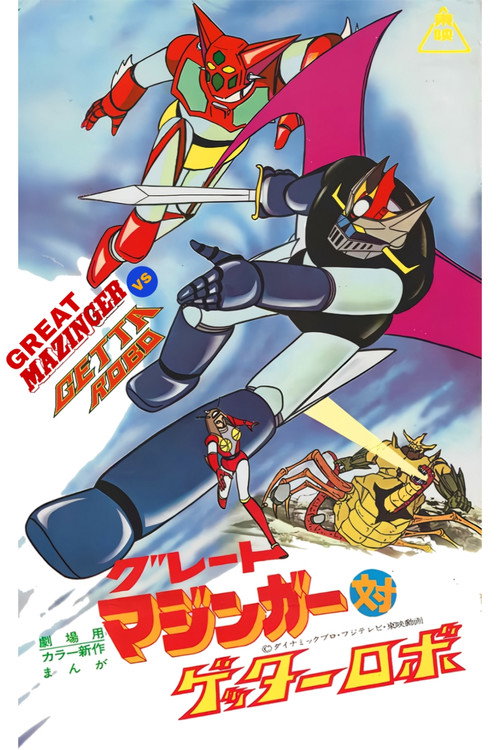
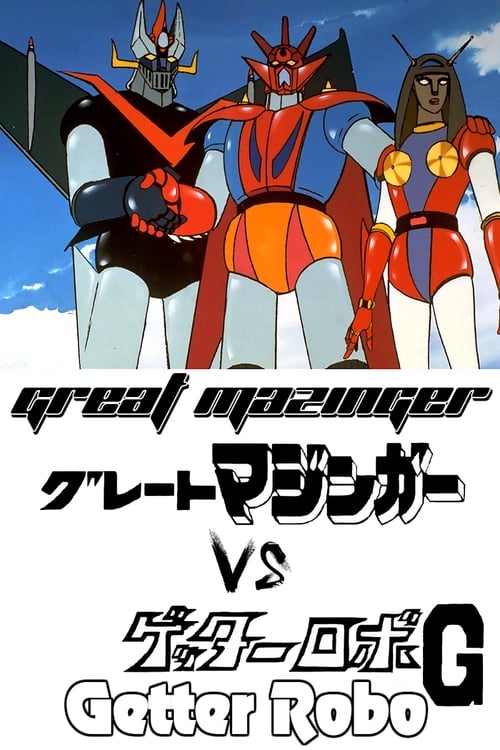
Great Mazinger vs. Getter Robo
1975
No user ratings available yet
Representation score: 3.7 out of 10
Representation Score
Limited
1975
Director
Masayuki Akehi
Runtime
25 minutes
Average Rating
No ratings yetNew Showbiz Analysis
This 1975 animation is a quintessential example of the 'Super Robot' genre, prioritizing high-stakes action and the defense of national structures. It operates within the conventional heroic frameworks of its era, focusing on technological supremacy and combat. The film lacks complexity in exploring diverse identities or subverting established social hierarchies. Instead, it centers on traditional archetypes of leadership and scientific progress to drive the narrative forward. Ultimately, the work reflects the specific cultural and temporal context of its production, emphasizing the protection of Japan and the world through centralized institutions.
Category Breakdown
The film does not include any representation of LGBTQ+ identities or narratives that question the assumption that everyone is straight or cisgender. The story focuses entirely on mechanical combat and external threats.
The plot relies on traditional masculine archetypes, centering on male pilots and scientific leaders. There is no evidence of challenging gender hierarchies or portraying masculinity as ineffective.
The perspective remains largely homogeneous and Japanese-centric. While non-human species appear, they serve as existential threats rather than nuanced explorations of racial or ethnic diversity.
The narrative reinforces traditional institutional stability and the preservation of existing social orders. It promotes the necessity of centralized scientific and military institutions for survival.
Characters with visible or invisible disabilities are not portrayed with significant control over their actions. Physical trauma, such as Ouishan's death, serves only as a plot catalyst for the hero.
Present on Screen
Limited or Absent
Official Synopsis
When a UFO arrives from space and attacks the Getter Institute, Getter Robo is launched to stop it; but the might of the UFO and its giant space monsters prove to be too much for the Getter team. Not only is Getter Robo defeated, but Ouishan is killed in action! With Getter Robo out of commission, the world's only hope appears to be Great Mazinger, but the aliens' power might also be too much for even him. Can Dr. Saotome build a new Getter Robo in time to help save Great Mazinger, Japan, and the entire world?
1975

1995
1982
1995

2012
1994
2016
1976
No reviews yet. Be the first to share your thoughts on this movie!
Use the rating form above to leave a star rating and optional review.