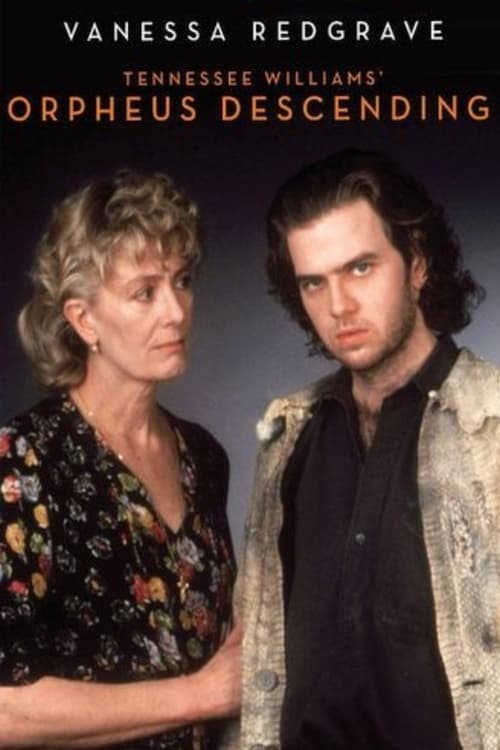
Orpheus Descending
1990
No user ratings available yet
Representation score: 6.8 out of 10
Representation Score
Fair
1960
NRDirector
Sidney Lumet
Runtime
121 minutes
Average Rating
No ratings yetNew Showbiz Analysis
Sidney Lumet uses social realism to disrupt the polished veneer of 1960s domesticity. The film excels in its empathetic portrayal of social alienation and the systemic pressures that isolate individuals. While it lacks explicit representation for LGBTQ+ or neurodivergent identities, its narrative architecture is progressive in its treatment of the 'outsider.' It centers on characters living outside stable family and economic structures. Ultimately, the film critiques institutional stability, focusing on those who exist on the margins of established social and racial norms.
Category Breakdown
The film does not include explicit LGBTQ+ characters or non-cisgender identities. It focuses on the tensions between the drifter and local women within traditional romantic frameworks.
Characters like Lady Torrence and Carol Cutere are portrayed as complex, autonomous figures rather than domestic stereotypes. However, the plot remains centered on the male protagonist's journey.
Val Xavier, a drifter of unknown origins, is presented as an outsider archetype, serving as a metaphor for those on the periphery of social norms. This character highlights the 'otherness' of being an outsider.
The narrative challenges the idealized small-town life by highlighting urban decay and economic pressure. It treats socially non-conforming characters with empathy rather than moral condemnation.
Jabe M. Torrance’s struggle with cancer introduces physical vulnerability. This condition primarily serves as a plot catalyst and emotional driver rather than a platform for character's ability to drive the story.
Present on Screen
Limited or Absent
Official Synopsis
Val Xavier, a drifter of obscure origins, arrives at a small town and gets a job in a store run by Lady Torrence. Her husband, Jabe M. Torrance, is dying of cancer. Val is pursued by Carol Cutere, the enigmatic local tramp-of-good-family.
1990

1963
1972
1938

1959
1962
1960
1966
No reviews yet. Be the first to share your thoughts on this movie!
Use the rating form above to leave a star rating and optional review.