
The Black Orchid
1959
No user ratings available yet
Representation score: 1.4 out of 10
Representation Score
Minimal
1970
GPDirector
Guy Green
Runtime
98 minutes
Average Rating
No ratings yetNew Showbiz Analysis
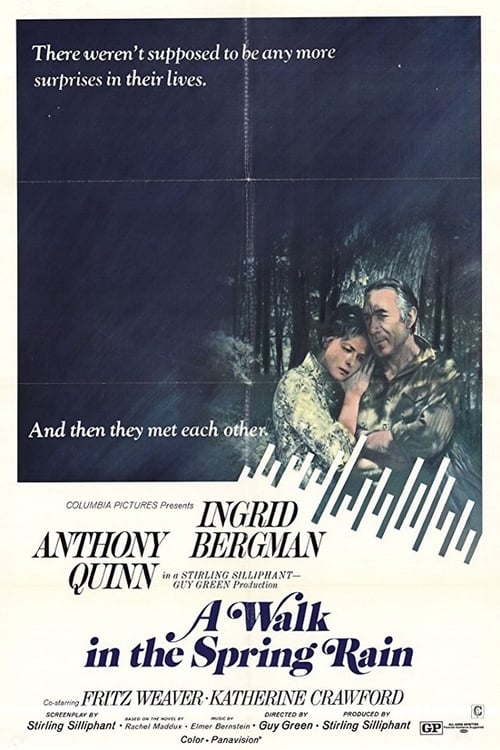
A Walk in the Spring Rain is a traditional period drama that emphasizes classic romantic storytelling over diverse representation. It reflects the norms of mid-century cinema, focusing on a middle-aged woman's romantic choices. While the film offers more independence to its female protagonist compared to older films, it lacks racial diversity and critical views of social structures. The story's environment is mostly uniform, mirroring the social constraints of its time. Overall, the film adheres to a framework of romantic idealism and traditional moral values, offering limited progressive elements or varied representation.
Category Breakdown
The film follows a typical heterosexual romantic storyline. There are no representations of same-sex relationships or non-binary gender identities.
The story focuses on a woman's emotional journey and her ability to make decisions. Despite pursuing emotional independence, the plot stays within traditional romantic relationships.
The cast is mainly white, reflecting the societal norms of the 1930s. The film does not include significant minority characters or diverse storylines.
The movie upholds conventional Western social norms and values. It presents a stable society without questioning religion, capitalism, or family structures.
There are no characters with visible or hidden disabilities. The story revolves around characters who are considered physically and mentally able-bodied.
Present on Screen
Limited or Absent
Official Synopsis
A sophisticated, middle-aged grandmother, wed to a New York law professor, falls in love with a down-to-earth Tennessee farmer.
1959

1971
1976

1958
1960
1974
1972
1955
No reviews yet. Be the first to share your thoughts on this movie!
Use the rating form above to leave a star rating and optional review.