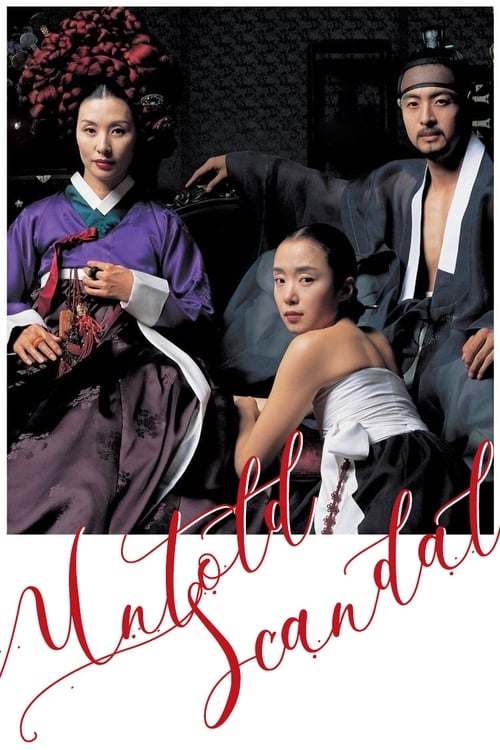
Untold Scandal
2003
No user ratings available yet
Diversity score: 5.1 out of 10

1998
Director
E J-yong
Runtime
108 minutes
Average Rating
No ratings yetSynopsis
A middle-aged woman has an affair with her much younger sister's fiancé.
Overall Score
Fair
Category Breakdown
LGBTQ+ Representation
The narrative focuses exclusively on heteronormative romantic entanglements. It does not feature LGBTQ+ characters or non-cisnormative gender identities.
Gender Representation
Seo-hyun is depicted as an individual navigating an emotional void rather than a submissive housewife. The film grants her significant agency, centering her psychological liberation over societal obligations.
Racial & Ethnic Diversity
The film presents a culturally homogeneous South Korean cast. This maintains cultural authenticity by focusing on the specific nuances of Korean social etiquette and class dynamics.
Religious & Cultural Diversity
The story subverts traditional Confucian values by framing infidelity as a pursuit of subjective truth. It challenges the nuclear family as an inherently stable or positive construct.
Disability Representation
There are no prominent depictions of visible or invisible disabilities that serve as central narrative drivers.
Strengths
Areas for Improvement
AI Analysis
An Affair is a sophisticated deconstruction of late-90s South Korean social hierarchies. It prioritizes individual interiority and emotional landscapes over traditional moralizing structures, making it a significant piece of New Korean Cinema. The film excels in its nuanced portrayal of female agency and its critique of domestic stagnation. By centering the protagonist's psychological needs, it disrupts conventional expectations of maternal and marital stability. However, the film remains strictly heteronormative and culturally homogeneous. While it offers deep cultural authenticity, it lacks representation for LGBTQ+ identities or diverse racial backgrounds.
2003

1953
1962
2021
2000
2013

2010
2011

2011
1996

2002
1998
No reviews yet. Be the first to share your thoughts on this movie!
Use the rating form above to leave a star rating and optional review.