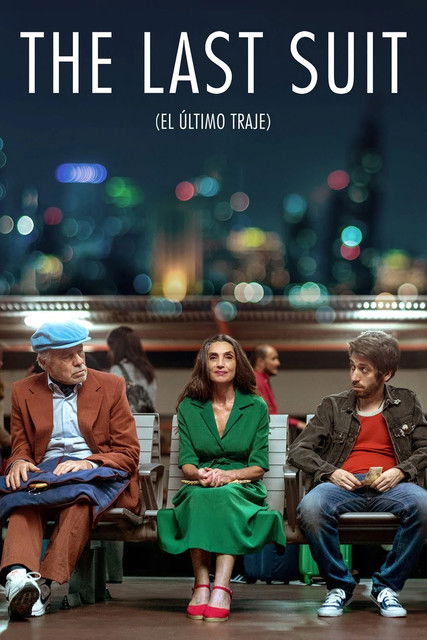
The Last Suit
2017
No user ratings available yet
Representation score: 6.7 out of 10
Representation Score
Excellent
2014
Director
Pierre-Henry Salfati
Average Rating
No ratings yetNew Showbiz Analysis
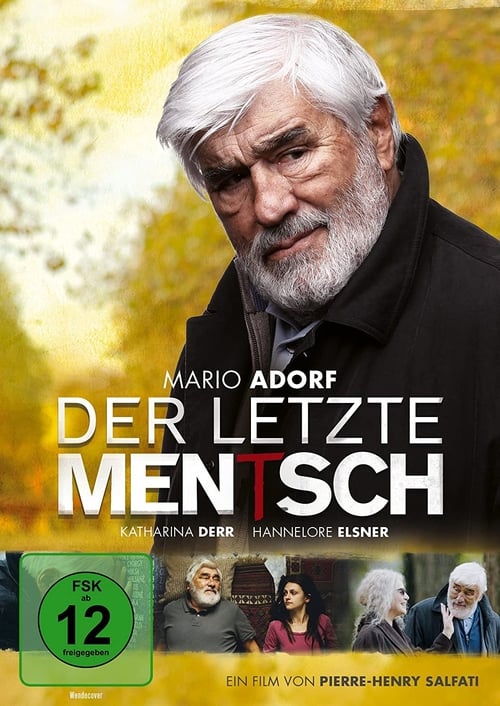
Der letzte Mentsch presents a multifaceted view of European identity through an multi-layered lens. By pairing a Holocaust survivor with a German-Turkish woman, the film reflects contemporary multicultural realities. The narrative effectively challenges institutional rigidity, showing how both state and religious bureaucracies can obstruct personal identity. This creates a compelling tension between official records and lived experience. While the film lacks LGBTQ+ representation and focuses heavily on ethnic and religious themes, its handling of gender ability to act and disability adds meaningful layers to the protagonist's journey.
Category Breakdown
The film does not include any explicit depictions of LGBTQ+ characters or relationships. Instead, it focuses on ancestral and ethnic identity.
Gül, a young woman, plays a significant role in the story by providing logistical leadership. This shifts the traditional protector role from the elderly male protagonist to the younger female character.
The film features a Jewish survivor paired with a German-Turkish woman, offering a nuanced look at modern European demographics. This approach highlights diverse backgrounds beyond the typical white-centric perspective in historical dramas.
The narrative criticizes rigid institutionalism by portraying bureaucratic and religious structures as obstacles to personal dignity. It emphasizes the importance of subjective memory over official documentation.
A blind woman in a Hungarian village serves as a key narrative element. Her presence suggests a focus on unique modes of perception and connection rather than mere plot utility.
Present on Screen
Limited or Absent
Official Synopsis
As a 15-year-old, Marcus survived several concentration camps, changed his name after liberation, and settled in Germany. From then on, he suppressed his past until it caught up with him again, now over 80 years old. Since he wants to be buried according to Jewish tradition, he needs proof of his identity—the tattooed prisoner number is not enough for the bureaucratic rabbis. So the young German-Turkish woman Gül drives him to his Hungarian village of birth, where no one knows him anymore. Only a blind woman seems to have been expecting him.
2017

2007

2014

2014

2007

1999

2016

2015
No reviews yet. Be the first to share your thoughts on this movie!
Use the rating form above to leave a star rating and optional review.