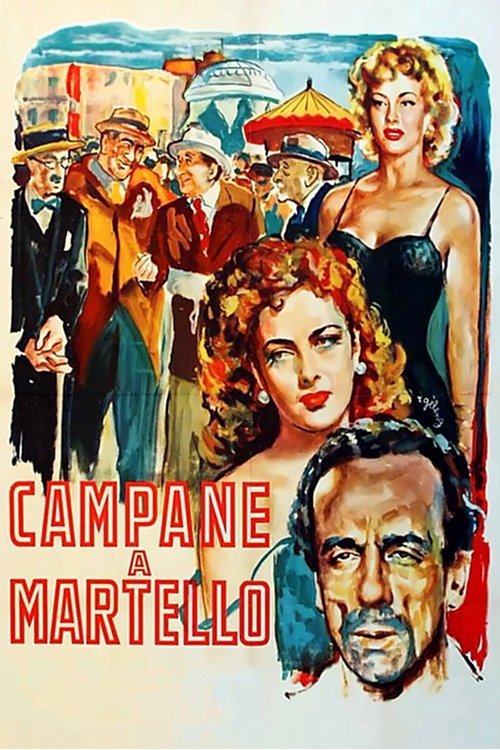
Campane a martello
1949
No user ratings available yet
Diversity score: 3.9 out of 10

1975
Director
Mauro Bolognini
Runtime
110 minutes
Average Rating
No ratings yetSynopsis
A strong-willed woman risks everything to support the cause of anti-fascism in World War II Italy.
Overall Score
Limited
Category Breakdown
LGBTQ+ Representation
The film operates within a traditional heteronormative framework. The narrative focuses on a central romantic pairing between Libera and her male counterpart, with no evidence of same-sex intimacy.
Gender Representation
Libera is a strong-willed protagonist who challenges traditional gendered expectations. By risking everything for her convictions, she displays an intellectual and moral autonomy that disrupts conventional domestic hierarchies.
Racial & Ethnic Diversity
The cast is primarily Italian, reflecting the demographic homogeneity of 1940s Italy. The film does not utilize race-bent casting or non-white protagonists, adhering to historical realism.
Religious & Cultural Diversity
The story centers on anti-fascist resistance, prioritizing individual political conviction over state-sanctioned patriotism. This architecture explores the tension between personal morality and oppressive, authoritarian institutional structures.
Disability Representation
There are no visible or invisible disabilities portrayed as central to the character arcs. The film lacks depictions of neurodivergence or physical impairments.
Strengths
Areas for Improvement
AI Analysis
Mauro Bolognini’s drama is a period piece that prioritizes historical realism and political resistance over modern intersectional representation. Its primary progressive value is found in its critique of systemic Fascist oppression rather than the diversification of identity markers. The film succeeds in subverting gendered passivity by placing a woman at the center of a high-stakes political struggle. However, it remains anchored in the social and demographic norms of mid-century Italy. While the narrative offers a sophisticated look at individual agency against state-mandated order, it lacks representation for LGBTQ+ identities, diverse racial backgrounds, or characters with disabilities.
1949
1964
1948
1954
1947

1978
1948

2000

2024
1980

1957

1963
No reviews yet. Be the first to share your thoughts on this movie!
Use the rating form above to leave a star rating and optional review.