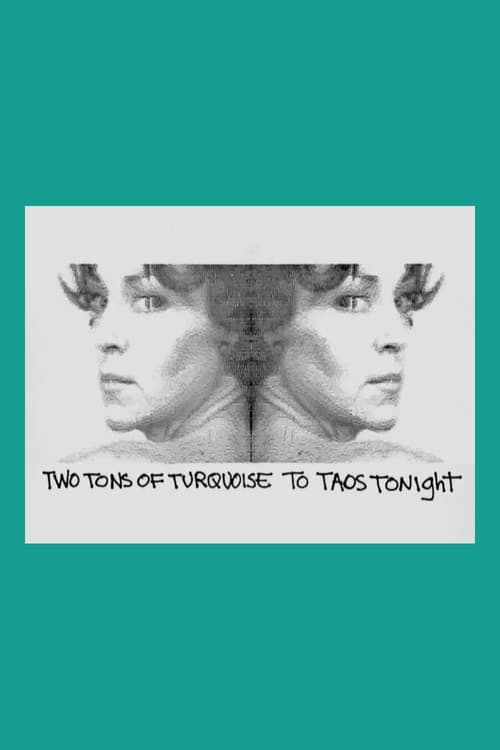
Two Tons of Turquoise to Taos Tonight
1975
No user ratings available yet
Diversity score: 4.6 out of 10

1968
Director
Robert Downey Sr.
Runtime
46 minutes
Average Rating
No ratings yetSynopsis
A bizarre portrait of the New York singles scene.
Overall Score
Limited
Category Breakdown
LGBTQ+ Representation
The film offers no explicit evidence of LGBTQ+ characters or narratives. While the New York singles scene setting often hosts diverse social dynamics, queer agency remains unconfirmed.
Gender Representation
The focus on the singles scene suggests an interest in social hierarchies. While female cast members are present, their specific roles and level of agency are undefined.
Racial & Ethnic Diversity
Historical themes like the Civil War and Vietnam War suggest period-specific casting. There is no documented evidence of a non-white majority or color-blind casting practices.
Religious & Cultural Diversity
The narrative disrupts historical continuity by blending disparate eras. This structural fragmentation challenges singular cultural moralities, though it lacks an explicit political manifesto.
Disability Representation
There is no evidence of characters with visible or invisible disabilities within the thematic keywords or verified context.
Strengths
Areas for Improvement
AI Analysis
Robert Downey Sr.’s experimental approach creates a fragmented landscape that prioritizes surrealism over traditional character-driven storytelling. By juxtaposing the American Civil War with the Vietnam War and the New York singles scene, the film disrupts linear historical continuity. This structural instability suggests a departure from conventional realism. However, this avant-garde style does not translate into clear intersectional representation. The film lacks documented evidence of intentional efforts to subvert social hierarchies or include diverse identities through character agency. The thematic breadth is wide, but the social depth remains unverified. Ultimately, the work functions more as a structural experiment than a vehicle for social commentary. While it avoids traditional narrative teleology, it fails to provide meaningful visibility for marginalized groups.
1975
1969
1971
1974

1972
1978
1989
1973
1974
1979
1989
1964
No reviews yet. Be the first to share your thoughts on this movie!
Use the rating form above to leave a star rating and optional review.