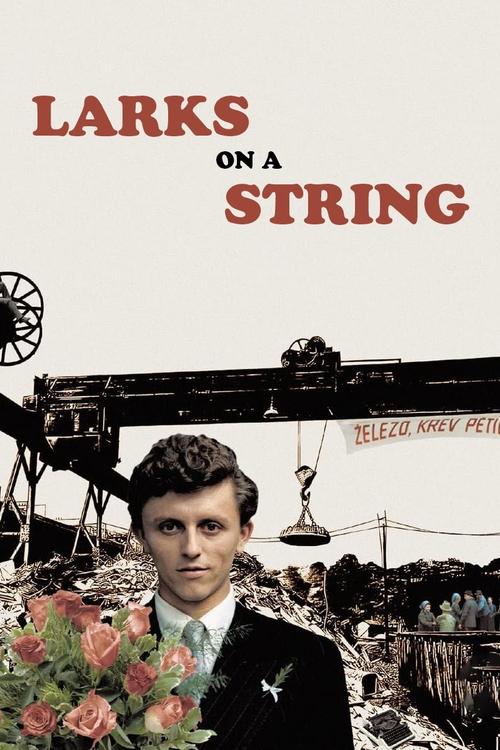
Larks on a String
1990
No user ratings available yet
Representation score: 5.7 out of 10

Representation Score
Good
1992
Director
Raúl Ruiz
Runtime
125 minutes
Average Rating
No ratings yetNew Showbiz Analysis
Little White Dove serves as a cinematic exploration of Chile's socio-political volatility. By intertwining a personal romance with a high-stakes assassination plot, the film uses individual stories to explore systemic instability and class tensions. The film stands out for its critique of military and class hierarchies, offering a localized perspective on Latin American social structures. However, it does not explicitly represent LGBTQ+ identities or disabilities.
Category Breakdown
The film focuses on a heterosexual relationship between a working-class girl and an upper-class boy. There is no indication of queer identities or experiences.
A female protagonist is central to the story, actively shaping events despite being in a volatile political environment dominated by men.
The film provides a localized perspective on historical events in Chile, examining social and ethnic divisions through the lens of Chilean society and class.
The film critiques centralized military authority and traditional state institutions, framing the 1973 coup as a site of conflict rather than order.
There is no evidence of physical or neurodivergent disabilities portrayed in the film.
Present on Screen
Limited or Absent
Official Synopsis
A young working class girl falls in love with an upper class boy who is part of the plot to assassinate General Schneider, head of the Chilean Army. The film was shot in 1973 over six weeks with a budget of $170,000. As a result of the 1973 Chilean coup d'état and military dictatorship (1973–1990), the film was presumed lost for many years and not released until 1992.
1990

1973
1973
1963
1968

1967

2020
1987
No reviews yet. Be the first to share your thoughts on this movie!
Use the rating form above to leave a star rating and optional review.