New Showbiz

You are here:
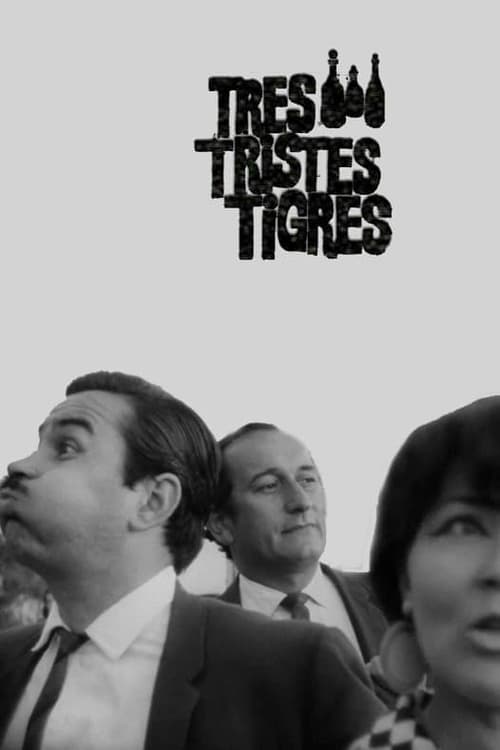
Three Sad Tigers

Three Sad Tigers

1968

Director

Raúl Ruiz

Runtime

100 minutes

Average Rating

No ratings yet

Synopsis

A glimpse at the few days and nights in the lives of a brother and sister, Amanda and Tito, in Santiago’s semi-criminal underworld. A rambling portrait of Chilean society.

Where to Watch

Diversity & Representation

Overall Score

6.3/10

Good


Category Breakdown

LGBTQ+ Representation

Fair

The film utilizes surrealist dream-logic rather than explicit identity politics. While it lacks overt non-cisnormative narratives, its departure from traditional romantic tropes suggests a subtle loosening of heteronormative constraints.

Gender Representation

Fair

Gender hierarchies are disrupted by avoiding common 1960s archetypes of dominance and submission. However, the score is limited by a lack of high-agency, female-driven plot arcs within the unstable underworld setting.

Racial & Ethnic Diversity

Good

As a piece of Third Cinema, the film offers a non-Anglo-centric perspective that challenges Hollywood hegemony. It provides a nuanced look at Chilean social strata outside of Western-centric narratives.

Religious & Cultural Diversity

Good

The film excels at subverting Western institutions by replacing traditional morality with situational ethics. Its chaotic, non-linear structure critiques the ordered, stable worldview of the West.

Disability Representation

Minimal

There is no significant evidence regarding the portrayal of physical or neurodivergent disabilities in this work.

Strengths

  • Challenges Western narrative hegemony through its experimental, non-linear storytelling.
  • Subverts traditional gender hierarchies by avoiding common 1960s archetypes.
  • Provides a localized, non-Anglo-centric perspective of Chilean society.

Areas for Improvement

  • Lacks explicit, codified LGBTQ+ narratives or non-cisnormative identities.
  • Provides limited high-agency, female-driven plot arcs.
  • Shows no significant evidence of disability representation.

AI Analysis

Raúl Ruiz’s debut is a foundational Chilean New Wave text that uses surrealism to deconstruct social order. It succeeds in challenging Western narrative hegemony through its experimental structure and localized, non-Western perspective. While the film avoids traditional patriarchal tropes and Hollywood-style casting, it lacks explicit representation for specific identities. The focus remains on moral relativism and the absurdity of human connection rather than codified social critiques. Ultimately, the film's strength lies in its cultural subversion and its role in the Third Cinema movement, even if specific character-driven diversity metrics remain moderate.

How are these scores produced? →

Similar Movies

Movie poster for Death Strokes

Death Strokes

2013

No user ratings available yet
Diversity score: 6.4 out of 10

Rate this Movie

No rating selected
Use arrow keys to select a rating from 1 to 5 stars
Optional text review, maximum 2000 characters
Tip: Wrap spoilers with ||double pipes|| to hide them
0/2000 characters
You must be signed in to submit a rating

Reviews

No reviews yet. Be the first to share your thoughts on this movie!

Use the rating form above to leave a star rating and optional review.