People's Republic of Desire
2018
No user ratings available yet
Diversity score: 5.8 out of 10
2015
PGDirector
Ting Song, Adam Smith
Runtime
61 minutes
Average Rating
No ratings yetSynopsis
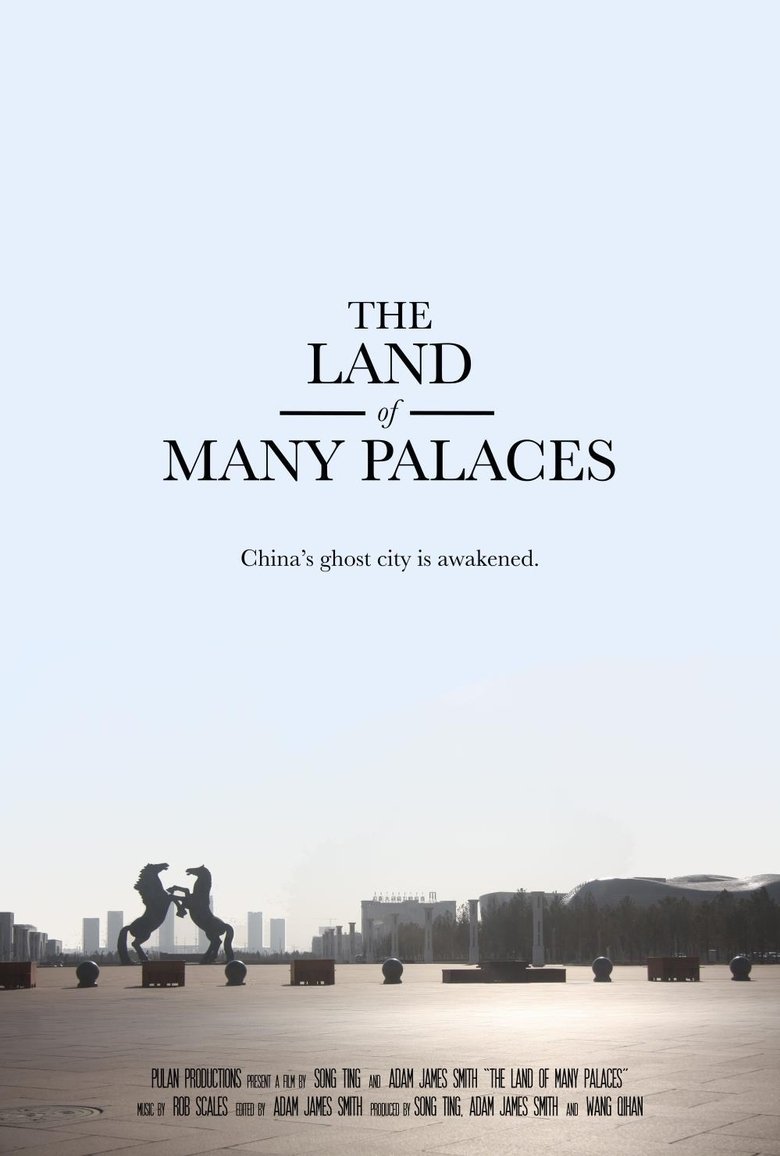
In Ordos, China, thousands of farmers are being relocated into a new city under a government plan to modernize the region. "The Land of Many Palaces" follows a government official whose job is to convince these farmers that their lives will be better off in the city, and a farmer in one of the last remaining villages in the region who is pressured to move. The film explores a process that will take shape on an enormous scale across China, since the central government announced plans to relocate 250,000,000 farmers to cities across the nation, over the next 20 years.
Overall Score
Fair
Category Breakdown
LGBTQ+ Representation
The documentary focuses on the socio-economic realities of rural-to-urban relocation in Ordos. There are no LGBTQ+ characters or narratives addressing non-heteronormative identities present in the film.
Gender Representation
The narrative centers on the tension between state bureaucracy and agrarian tradition. There is no specific evidence of female agency or the subversion of patriarchal structures.
Racial & Ethnic Diversity
The film provides visibility to the farmers of Ordos, disrupting a homogenized view of Chinese modernization. It offers a nuanced look at this specific regional demographic.
Religious & Cultural Diversity
The film explores the friction between central government mandates and individual autonomy. It examines the impact of state-driven modernization on traditional ways of life.
Disability Representation
Disability, neurodivergence, or chronic illness are not central themes or character drivers. The focus remains on the broader socio-economic movement of the population.
Strengths
Areas for Improvement
AI Analysis
The Land of Many Palaces serves as a sociological study of systemic transition in China. It succeeds by centering the lived experiences of rural populations facing massive state-led relocation, providing a necessary counter-narrative to idealized views of modernization. However, the film lacks representation for several identity groups. There is no evidence of LGBTQ+ narratives or specific focus on disability and neurodivergence, leaving these perspectives entirely absent from the documentary's scope. Ultimately, the film's value lies in its institutional critique. It effectively captures the tension between traditional social structures and the overwhelming force of government-mandated urban development.
2018
2012
2014
2012

2014
2017
2001

2015
2011
2013
2023
2017
No reviews yet. Be the first to share your thoughts on this movie!
Use the rating form above to leave a star rating and optional review.