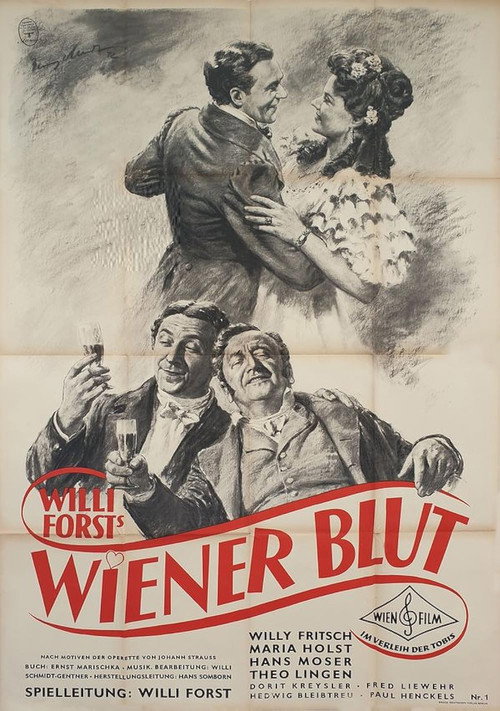
Vienna Blood
1942
No user ratings available yet
Representation score: 2.5 out of 10
Representation Score
Minimal
1934
ApprovedDirector
Alfred Hitchcock
Runtime
81 minutes
Average Rating
No ratings yetNew Showbiz Analysis
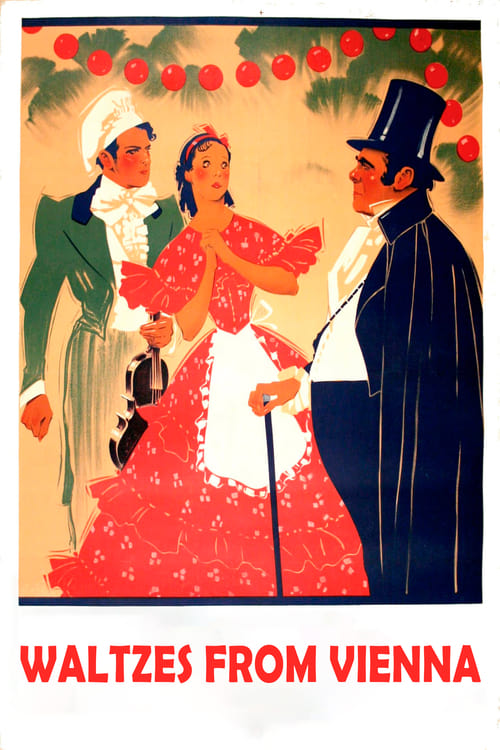
Waltzes from Vienna functions as a traditional period piece that closely follows the social and narrative conventions of its time. The plot relies on standard biographical structures and romantic clichés to tell the story of Johann Strauss Jr. While the film celebrates a significant historical figure, it does so through a lens of historical preservation rather than social critique. Character dynamics reinforce established gender and cultural norms of the 1930s. Ultimately, the film offers minimal disruption to social hierarchies, focusing instead on the tension between artistic passion and familial expectations within a homogeneous European setting.
Category Breakdown
The film follows a traditional romantic storyline between a male protagonist and a female love interest. There are no representations of non-binary genders or narratives that challenge the assumption that everyone is straight or cisgender.
Female characters such as Resi and the Countess play supporting roles, serving mainly as catalysts for the male protagonist's inspiration. They do not take leading roles in driving the plot forward.
Set in historical Vienna, the film focuses on a specific European musical heritage. The cast appears homogeneous, typical of era-specific biographical dramas.
The story centers on preserving Western classical music and European history. It adheres to conventional mid-century biographical storytelling without questioning Western institutions.
The narrative contains no depiction of physical, neurodivergent, or mental health conditions.
Present on Screen
Limited or Absent
Official Synopsis
In Vienna, aspiring composer Johann Strauss Jr. clashes with his domineering father, who wants him to abandon music for a steady job in a bakery. Torn between his love for the baker’s daughter, Resi, and the encouragement of a wealthy countess, Strauss finds inspiration that leads to the creation of "The Blue Danube."
1942
1955
1936
1937

1934

1954
1936
1951
No reviews yet. Be the first to share your thoughts on this movie!
Use the rating form above to leave a star rating and optional review.