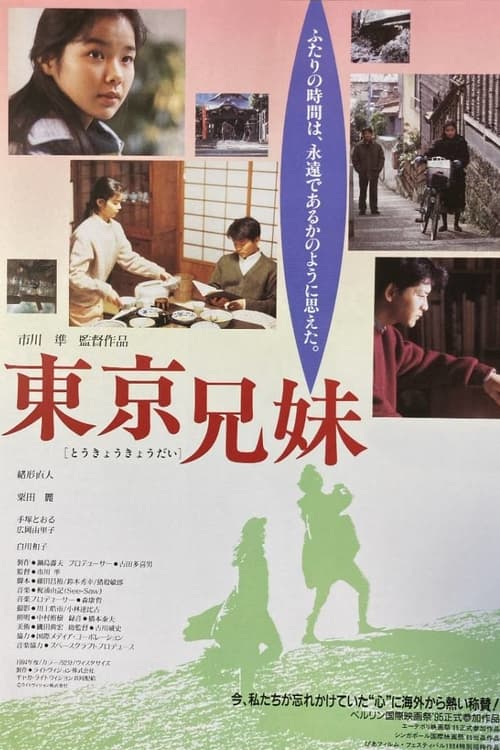
The Tokyo Siblings
1995
No user ratings available yet
Diversity score: 4.1 out of 10

1996
Director
Jun Ichikawa
Runtime
110 minutes
Average Rating
No ratings yetSynopsis
There still stands a famous apartment building where such prominent manga artists as Tezuka Osamu, Shotaro Ishinomori and Fujio Akatsuka once lived, worked, and shared experiences.
Overall Score
Fair
Category Breakdown
LGBTQ+ Representation
The film focuses on the professional camaraderie and creative friction between legendary manga artists. It lacks explicit depictions of non-cisnormative identities or critiques of heteronormativity.
Gender Representation
The narrative centers on a historically male-dominated creative ecosystem. It prioritizes masculine-coded spaces of production and lacks the structural subversion of gender hierarchies.
Racial & Ethnic Diversity
The cast and setting are ethnically homogeneous, reflecting the historical reality of the Tokiwa-so community. It portrays a specific cultural moment without utilizing racial diversity.
Religious & Cultural Diversity
The film highlights the bohemian, communal lifestyle of struggling artists. This subtly challenges rigid, corporate-driven Japanese structures by prioritizing the creative process over institutional stability.
Disability Representation
There is no evidence of characters with visible or invisible disabilities integrated into the narrative. Disability is not utilized as a central theme or tool for agency.
Strengths
Areas for Improvement
AI Analysis
Jun Ichikawa’s film functions as a period-specific biographical drama that preserves a unique era of Japanese manga history. The narrative prioritizes the intellectual and artistic development of legendary creators within their historical context. Because the film adheres strictly to the historical homogeneity of the Tokiwa-so community, it lacks modern intersectional representation. The focus remains on aesthetic and atmospheric storytelling rather than socio-political disruption. Ultimately, the work serves as a localized historical study. It captures the professional lives of icons like Tezuka Osamu without attempting to subvert the traditional demographics of the 1940s-50s industry.
1995
2004

1951
1957
2021
2021

1997
1970
2011
1953
1962
1932
No reviews yet. Be the first to share your thoughts on this movie!
Use the rating form above to leave a star rating and optional review.