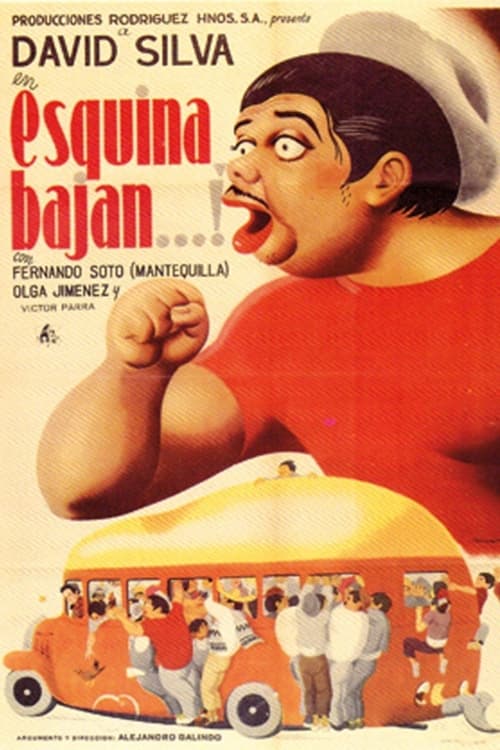
Get Off at the Next Corner!
1948
No user ratings available yet
Representation score: 4.0 out of 10
Representation Score
Minimal
1949
TV-PGDirector
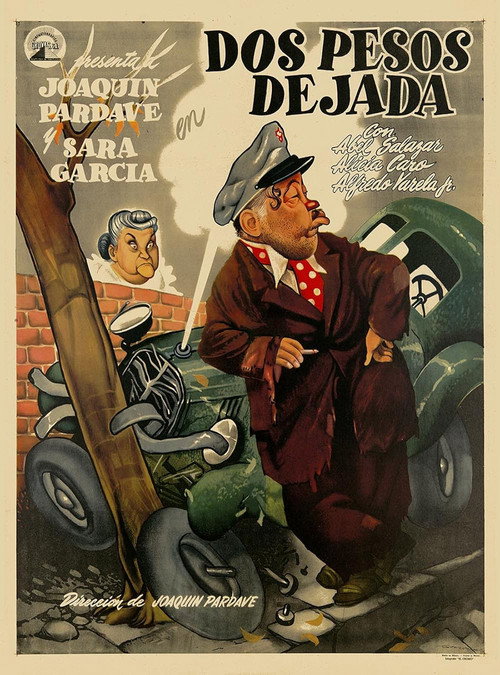
Joaquín Pardavé
Runtime
100 minutes
Average Rating
No ratings yetNew Showbiz Analysis
Two Pesos Left (1949) functions as a traditional melodrama designed to restore social and familial balance. The story follows a restorative arc where a disruption to the family unit is resolved through parental intervention. The film reinforces established social hierarchies and patriarchal leadership. By focusing on resolving social transgressions through traditional authority, the narrative prioritizes mid-century moral stability over social disruption. Ultimately, the work reflects the cinematic conventions of its era, emphasizing domestic stability and traditional gender roles within a Mexican cultural context.
Category Breakdown
The film focuses on heterosexual relationships and their consequences, without addressing non-cisgender identities or questioning the assumption that everyone is straight.
The story relies on traditional gender roles, featuring a woman who is abandoned and a man who restores order. The resolution is driven by male authority.
As a Golden Age Mexican film, it centers on Mexican identity but may not explore diverse backgrounds or multi-layered experiences.
The narrative emphasizes a singular moral code and the sanctity of the family unit, promoting traditional social stability through established figures and institutions.
There is no mention of characters with physical or neurodivergent disabilities in the synopsis.
Present on Screen
Limited or Absent
Official Synopsis
Fermín is a young taxi driver but also a playboy. He sets out to woo the daughter of a merchant who has amassed a small fortune. His plans go off track, and the consequences are imminent.
1948

1992
1950

1921
1948

2013
1953
1951
No reviews yet. Be the first to share your thoughts on this movie!
Use the rating form above to leave a star rating and optional review.