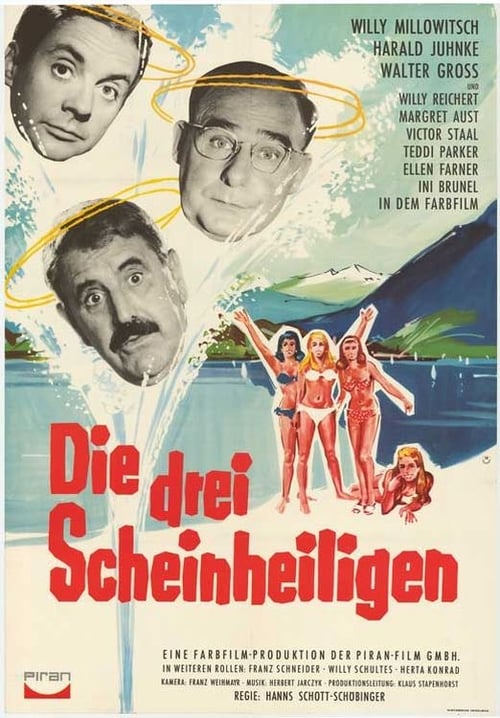
Die drei Scheinheiligen
1964
No user ratings available yet
Representation score: 1.6 out of 10
No Poster Available
Representation Score
Limited
1976
RDirector
Gerhard Janda
Runtime
89 minutes
Average Rating
No ratings yetNew Showbiz Analysis
Duet for Three is a product of its era, functioning as a traditional comedy that adheres to the social and demographic hierarchies of the mid-1970s. It lacks the intentionality needed to disrupt conventional expectations regarding identity or institutional critique. The film's demographic makeup is largely homogeneous, mirroring the regional European cinema of the time. It offers little in the way of diverse casting or varied cultural perspectives. Ultimately, the work follows established comedic patterns rather than seeking to challenge social norms or provide meaningful representation for underrepresented groups.
Category Breakdown
The film does not explicitly include non-straight relationships or challenge the assumption that everyone is straight. Its portrayal aligns with the conventional social structures of 1976.
The narrative relies on traditional comedic archetypes where women play minor roles and men hold positions of power. The film does not significantly explore or deconstruct masculine leadership roles.
The production reflects the demographic homogeneity common in mid-1970s European cinema. There is no evidence of diverse casting or non-white protagonists.
The work operates within traditional Western frameworks. It does not frame institutions like family or religion as oppressive, adhering instead to standard social mores.
There is no indication that disability or neurodivergence serves as a central narrative driver or a tool for character's ability to drive the story.
Present on Screen
Limited or Absent
1964
1964
1961
1976
1971
1968
1967
1981
No reviews yet. Be the first to share your thoughts on this movie!
Use the rating form above to leave a star rating and optional review.