Illuminated Texts
1982
No user ratings available yet
Representation score: 5.5 out of 10
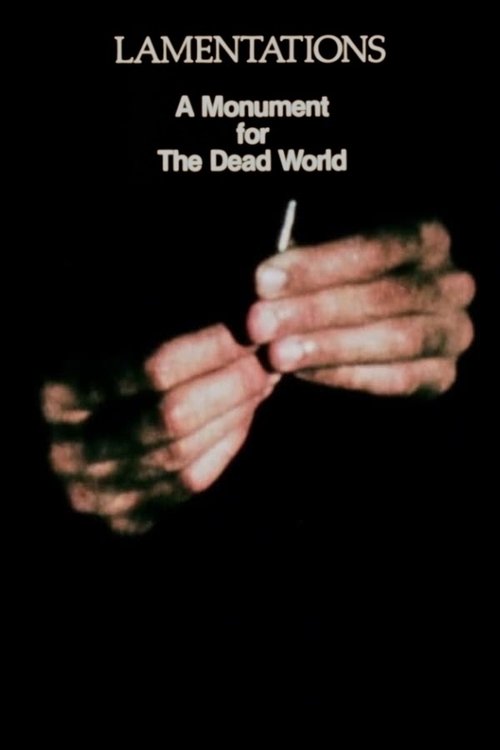
Representation Score
Good
1985
Director
R. Bruce Elder
Runtime
437 minutes
Average Rating
No ratings yetNew Showbiz Analysis
Lamentations is a philosophical meditation that prioritizes intellectual deconstruction over character-driven diversity. Its strength lies in its cultural critique of Western authority and religious structures, offering a secular, existential perspective. However, the film heavily focuses on male historical figures and Western intellectualism, creating a narrow scope regarding gender and racial representation. Ultimately, the narrative ability to act remains centered on Anglo-Saxon history.
Category Breakdown
The film does not explicitly depict queer identities or same-sex intimacy. Its focus remains on historical and philosophical figures, leaving little room for stories that include diverse gender identities.
The narrative heavily focuses on male historical figures, such as Newton, Berkeley, and Liszt. This maintains a traditional gendered focus on male intellectual history.
While the film visits the Yucatan, the core intellectual debates center on Western figures. There is no evidence of characters of color playing key roles in the story.
The work excels by breaking down Western institutions and religious traditions. It favors secular, existential inquiry over traditional, institutionalized morality through its philosophical skepticism.
Portrayals of a deranged man and an arrogant psychiatrist suggest an exploration of mental health issues. However, these figures may serve more as symbols rather than fully developed characters with ability to act.
Present on Screen
Limited or Absent
Official Synopsis
Lamentations: A Monument to the Dead World belongs to a 35-hour film cycle, The Book of All the Dead, which comprises the bulk of Toronto-based Bruce Elder’s filmmaking from 1975 to 1994. In ancient Egyptian culture, the Book of the Dead consisted of religious texts intended to help preserve the spirit of the departed in the afterlife — but in Elder’s reading, that comforting idea of continuity takes on a rather darker cast. Lamentations is comprised of a complex audio and visual patchwork: a philosophical meditation superimposed as text throughout the film; vignettes featuring a comical but disturbing Franz Liszt, a debate between Isaac Newton and George Berkeley, an angry, deranged man in an alley, and an arrogant psychiatrist; and a final search for salvation in the forests of British Columbia, the American Southwest, and Mexico’s Yucatan.
1982
1978
1994

1983
1994

2011
1983
1987
No reviews yet. Be the first to share your thoughts on this movie!
Use the rating form above to leave a star rating and optional review.